

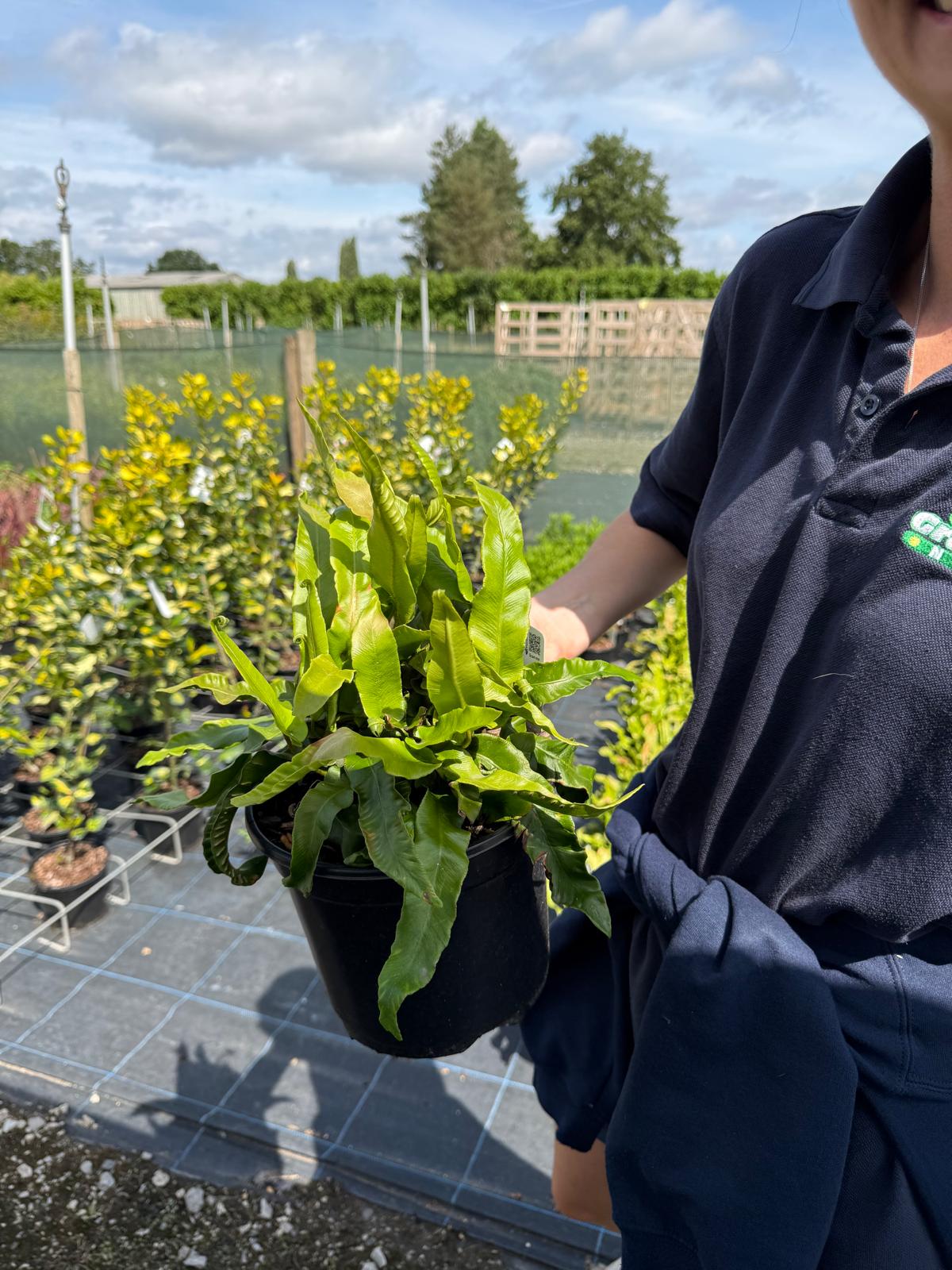

About Asplenium scolopendrium 3 Litre Pot
Asplenium scolopendrium – The Elegant Hart’s Tongue Fern
Asplenium scolopendrium, commonly known as Hart’s Tongue Fern, is a striking evergreen fern valued for its simple, strap-shaped fronds and architectural presence. Unlike many ferns with finely divided foliage, Hart’s Tongue features long, undivided, glossy green leaves that rise gracefully from the crown, creating a bold, sculptural effect. It thrives in shady, moist conditions, making it ideal for woodland gardens, shaded borders, and underplanting beneath trees or shrubs.
With its low-maintenance nature, evergreen habit, and graceful form, Asplenium scolopendrium is perfect for adding texture and year-round interest to shady garden areas.
Why Grow Asplenium scolopendrium?
Bold, Evergreen Fronds – The strap-like, glossy green fronds provide year-round structure and a strong visual statement in shade gardens, contrasting beautifully with delicate ferns or flowering perennials.
Architectural Form – Upright, tongue-shaped leaves form neat clumps, giving the plant a tidy, sculptural appearance that works well in borders, woodland edges, and container plantings.
Shady Garden Performer – Thrives in part-shade to full shade, tolerating conditions that many flowering plants struggle with. Ideal for brightening darker corners of the garden.
Low Maintenance and Hardy – Once established, Hart’s Tongue Fern requires minimal care. It is tolerant of a range of soils, including clay, loam, and sandy conditions, as long as they remain moist and well-drained.
Great Companion Plant – Perfect for woodland-style plantings, under trees, or alongside hostas, pulmonarias, and other shade-loving plants.
Height and Spread of Asplenium scolopendrium
Hart’s Tongue Fern typically grows to 30–60cm (12–24 inches) in height, with a spread of 30–45cm (12–18 inches). Clumps form gradually over time, creating a bold, architectural presence in shaded areas.
Where to Site Your Asplenium scolopendrium
-
Shaded Borders: Perfect for areas under trees, along fences, or beside walls.
-
Woodland Gardens: A natural choice for shaded, moist woodland-style planting.
-
Containers: Can be grown in pots for patios or shaded terraces.
-
Rock Gardens: Performs well in shaded rockeries or crevices.
-
Moist Sites: Thrives in consistently damp soils without standing water.
How to Grow and Care for Your Asplenium scolopendrium
Soil – Prefers moist, humus-rich, well-drained soil. Tolerates clay and loam, but avoid waterlogged sites. Adding organic matter improves performance.
Light – Thrives in part-shade to full shade. Avoid direct, hot sunlight, which can scorch the fronds.
Watering – Keep the soil evenly moist, particularly during dry spells. Young plants benefit from regular watering until established.
Maintenance
Pruning: Remove any dead or damaged fronds to maintain a tidy appearance.
Mulching: Apply a layer of mulch to conserve moisture and protect roots.
Pests & Diseases: Very few issues; generally pest- and disease-resistant.
Perfect Plant Combinations
-
Shade-Loving Perennials: Pair with Hosta, Heuchera, Pulmonaria, or Brunnera.
-
Woodland Plants: Complements ferns, primulas, and spring bulbs in shaded areas.
-
Evergreen Groundcover: Works well with ivy or pachysandra for year-round greenery.
-
Textural Contrast: Contrasts beautifully with finely textured grasses or flowering plants.
Conclusion
Asplenium scolopendrium (Hart’s Tongue Fern) is a graceful, evergreen fern that provides architectural structure and texture in shady gardens. Its bold, strap-shaped fronds, low-maintenance nature, and adaptability make it an excellent choice for woodland borders, shaded beds, and container planting.
Plants well with
Our growers' picks to plant alongside Asplenium scolopendrium 3 Litre Pot for a fuller, longer-lasting display.
-
Dryopteris erythrosora - Autumn Fern 2 Litre Pot
Dryopteris erythrosoraFull sunSemi-evergreenIn stockRegular price £6.00Regular price -
Polystichum Polyblepharum 2 Litre Pot
Polystichum polyblepharumPartial shadeEvergreenIn stockRegular price £6.00Regular price -
Hosta Sieboldiana Elegans 2 Litre Pot
Hosta sieboldiana var. elegansPartial shadeDeciduousIn stockRegular price £5.45Regular price -
Helleborus Hyb.Harvington Double White 2 Litre Pot
Helleborus × hybridus Harvington double white (d)Partial shadeSemi-evergreenIn stockRegular price £7.50Regular price


