

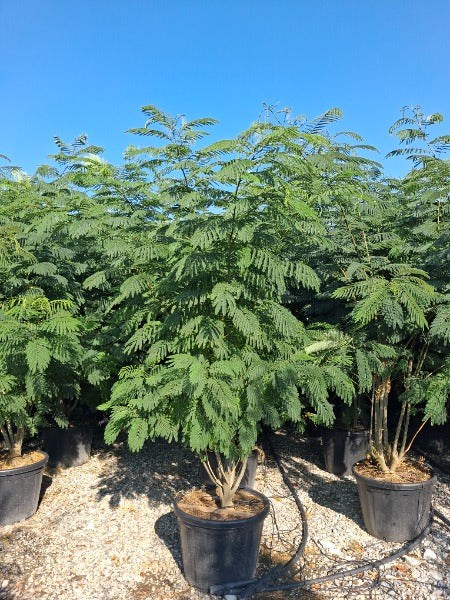

About Albizia Julibrissin 80 Litre Pot Multi Stem Parachute 200-250cm
The Persian silk tree is a striking, fast-growing deciduous tree prized for its exotic, fernlike foliage and spectacular summer display of fluffy, fragrant pink powder-puff flowers. A real showstopper in any garden, its broad, spreading canopy and graceful, arching branches give it an almost tropical feel that is sure to draw admiring glances throughout the warmer months.
Appearance
Foliage and flowers. The delicate, bipinnate leaves fold up at night and in rain, adding an extra layer of intrigue to this already eye-catching tree. From midsummer into early autumn, the canopy is smothered in clusters of silky, pink-tipped stamens that resemble fine brushes, releasing a sweet fragrance that attracts bees and butterflies in abundance. In autumn, long, flat seed pods follow the flowers, providing additional seasonal interest.
Growing conditions
Position. Albizia julibrissin thrives in a warm, sunny, sheltered spot — a south- or west-facing aspect is ideal. Full sun brings out the best flowering performance and encourages the tree to establish quickly. In cooler regions, planting against a south-facing wall can provide valuable extra warmth and protection.
Soil. This tree is adaptable to a wide range of soils, including poor or dry conditions, provided drainage is good. It dislikes prolonged waterlogging, so avoid heavy clay unless it has been well improved. Sandy, loamy, or chalky soils all suit it well. Once established, it is notably drought tolerant.
Hardiness. Generally hardy in milder parts of the UK, Albizia julibrissin can be vulnerable to prolonged hard frosts, especially when young. A sheltered site and a generous mulch of bark or well-rotted compost around the root zone each autumn will significantly improve its cold tolerance.
Care
Watering and feeding. Water regularly during the first growing season to help the tree establish a strong root system. Once settled in, it requires very little supplementary watering except during extended dry spells. An annual application of a balanced slow-release fertiliser in spring will encourage vigorous growth and a generous flower display.
Pruning. Little pruning is needed to maintain a healthy, attractive tree. Remove any dead, damaged, or crossing branches in late spring, once the risk of hard frosts has passed. This timing also allows you to assess which growth has survived the winter before cutting. Avoid heavy pruning, as this can reduce flowering and may stress the tree.
Mulching. Apply a deep mulch of bark chippings or well-rotted organic matter around the base each autumn, keeping it clear of the trunk. This helps to insulate the roots, retain moisture, and suppress weeds throughout the growing season.