
-
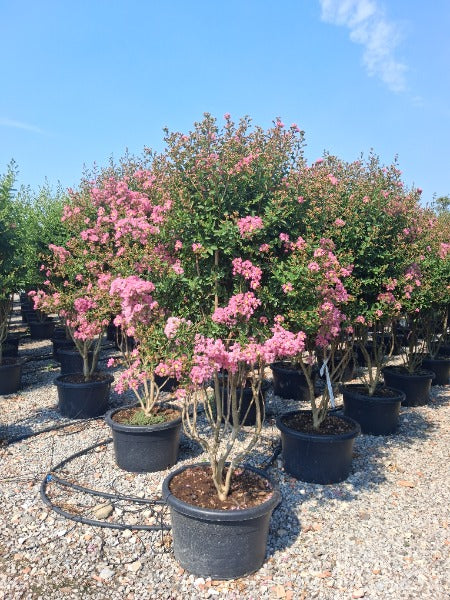
Lagerstroemia Indica Multi-Trunk Parachute 55 Litre 200-250cm
Lagerstroemia indicaFull sunDeciduousGetting lowRegular price £600.00Regular price

Parachute Plants
Parachute Shaped Trees & Shrubs
Architectural Specimen Plants with a Distinctive Parachute Form
Parachute Plants are a striking collection of trees and shrubs specially grown and trained into a distinctive architectural shape. Rather than referring to a particular plant species or variety, the term Parachute describes the form of the plant itself.
Typically featuring several clear stems supporting a broad, rounded and spreading canopy, these impressive specimens create a shape reminiscent of an open parachute. The exposed stems beneath the crown give the plants an elegant, sculptural appearance and make them an excellent choice for creating an instant focal point within the garden.
Our Parachute Plant collection can include many different species and varieties, from flowering shrubs and trees to evergreen and deciduous specimens. This means foliage, flowers, eventual size and growing requirements will vary, but every plant shares the same distinctive trained form.
Why Choose Parachute Plants?
Parachute-shaped plants are perfect for anyone looking for something a little different from a traditionally shaped tree or shrub.
Key benefits include:
- Distinctive architectural shape
- Beautiful multi-stem structure
- Broad, rounded canopy
- Creates an instant focal point
- Available across different plant varieties
- Flowering, evergreen and deciduous options
- Excellent for contemporary garden designs
- Ideal for statement planting
- Attractive open structure beneath the canopy
- Adds height without dense foliage at ground level
- Each specimen has its own individual character
What Is a Parachute Plant?
A Parachute Plant is not one particular type of plant.
Instead, Parachute is the name given to trees and shrubs that have been specially trained to create a particular shape.
Several stems typically rise from the base before supporting a wide, spreading crown of foliage above. This creates the characteristic open-stemmed, umbrella or parachute-like silhouette.
Different species can be grown into this form, so plants within our Parachute collection can look very different in terms of their leaves, flowers and seasonal interest.
Different Varieties of Parachute Plants
Because Parachute refers to the shape rather than the variety, our selection can change considerably throughout the year.
Depending on availability, the collection may include:
- Flowering Parachute plants
- Evergreen Parachute plants
- Deciduous Parachute plants
- Multi-stem trees
- Flowering shrubs
- Large specimen plants
- Plants with attractive autumn colour
- Architectural foliage plants
This makes the collection particularly interesting, as each variety brings its own characteristics while retaining the distinctive Parachute form.
Flowering Parachute Plants
Flowering trees and shrubs can look particularly impressive when grown in a Parachute shape.
The clear stems naturally draw the eye upwards towards the canopy, allowing the flowers to become the main feature when the plant comes into bloom.
Depending on the variety, flowering Parachutes can provide colour during spring, summer or autumn and make spectacular focal points within borders and landscaped areas.
Evergreen Parachute Plants
Where year-round structure is important, evergreen varieties trained into a Parachute form can provide permanent foliage as well as an architectural shape.
These can be particularly effective in contemporary gardens where strong shapes and evergreen structure form the framework of the planting scheme.
Where to Plant Parachute Plants
Parachute Plants are designed to make an impact and work particularly well where their distinctive shape can be fully appreciated.
They are ideal for:
- Statement planting
- Large borders
- Contemporary gardens
- Courtyards
- Patios and terraces
- Entrances and pathways
- Formal planting schemes
- Mediterranean-style gardens
- Large containers, where suitable
- Professionally landscaped gardens
A single specimen can create a strong focal point, while several Parachute Plants can be repeated through a larger planting scheme to create rhythm and structure.
Planting Under Parachute Plants
The raised canopy and open stems provide an excellent opportunity for underplanting.
Lower-growing plants can be positioned around the base without hiding the attractive structure of the Parachute itself.
Depending on the growing conditions and individual Parachute variety, they can work beautifully with:
- Ornamental grasses
- Lavender
- Salvia
- Nepeta
- Geranium
- Heuchera
- Ferns
- Ground-cover plants
- Low-growing perennials
Using softer planting beneath the strong architectural canopy can create an attractive contrast.
Parachute Plants for Contemporary Gardens
The clean lines and sculptural appearance of Parachute Plants make them particularly well suited to modern and contemporary garden design.
Their unusual form works beautifully alongside paving, gravel, raised beds and structured planting.
They can also look particularly impressive when positioned around seating or entertaining areas, where the canopy creates height and interest without completely obscuring the space beneath.
How to Care for Parachute Plants
Because Parachute describes the shape of the plant rather than its species, there isn't one set of growing instructions suitable for every plant in this category.
Sunlight, soil requirements, hardiness, watering and feeding will depend on the individual species and variety.
Always check the specific product information for the requirements of your chosen Parachute Plant.
Newly planted specimens should be watered thoroughly and regularly during their establishment period, particularly during warm, dry or windy conditions.
Maintaining the Parachute Shape
Some pruning will usually be required to help maintain the plant's distinctive broad canopy.
The exact pruning method and timing will depend on the individual variety, particularly with flowering plants where pruning at the wrong time could remove developing flower buds.
Any unwanted growth developing below the main canopy can generally be removed to help maintain the clean, open appearance of the stems.
Over time, careful pruning helps preserve the balanced, spreading Parachute shape that makes these plants so distinctive.
Are Parachute Plants All the Same Size?
No. As the term Parachute describes the shape rather than a particular plant, sizes can vary considerably.
Some specimens may have relatively compact crowns, while larger mature plants can develop broad, impressive canopies.
Stem height, overall height, canopy width and the number of stems can also differ between individual specimens.
Always check the measurements on the individual product before purchasing, particularly where the plant is intended for a specific space.
Buy Parachute Plants Online
Explore our range of Parachute Plants for sale, featuring an ever-changing selection of trees and shrubs carefully trained into this distinctive architectural form.
From spectacular flowering varieties to evergreen and deciduous specimens, our Parachute collection offers a variety of plants united by their beautiful clear stems and broad, spreading canopies.
Perfect for statement planting, contemporary gardens and creating instant architectural impact, these unusual specimens offer something very different from traditionally shaped trees and shrubs.
Shop our range of Parachute Plants online and discover unique specimen plants chosen for their distinctive shape, structure and garden impact.