
Rootball pre-order discount ends soon
Reserve rootball hedging now at pre-order prices — dug fresh and delivered when the season starts in October.

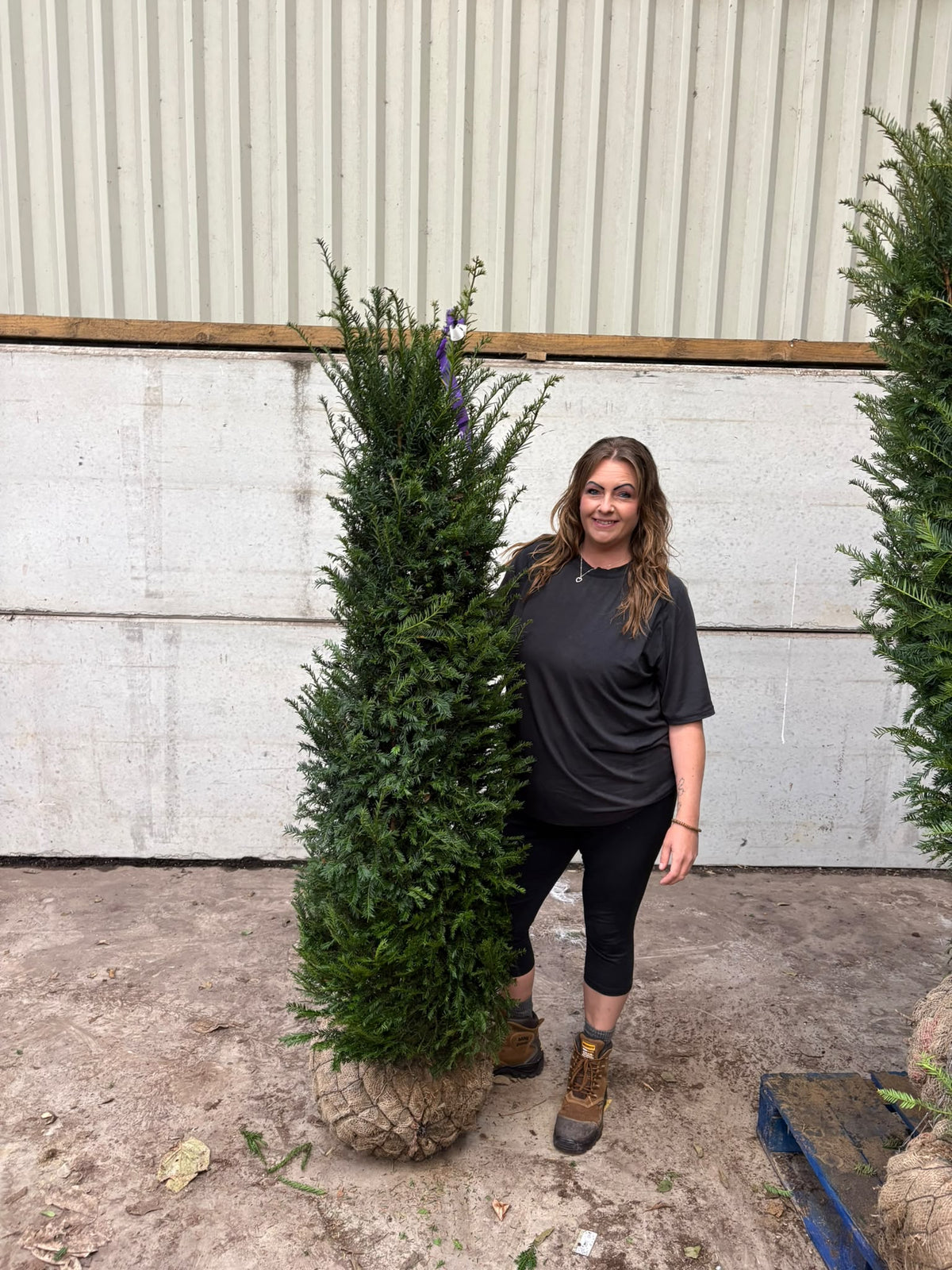

About Yew Hedging Root Ball 160-180cm Tall & 40-50cm Wide
Taxus baccata – Common Yew, a Timeless Evergreen Conifer
Taxus baccata, the Common Yew, is one of Britain's most celebrated and enduring native conifers, valued across centuries for its rich, dark evergreen foliage, exceptional longevity, and remarkable versatility in the garden. Whether grown as a sculpted formal hedge, an elegant topiary specimen, or a stately free-standing tree, Common Yew brings year-round structure, depth, and a sense of permanence to any planting scheme.
With its dense, fine-textured canopy of deep green, needle-like leaves and vivid red arils that stud female plants in autumn, Taxus baccata delivers both ornamental interest and ecological value across every season. Few plants can match its combination of architectural presence and quiet, understated beauty.
Habit & Appearance
Form and foliage. Common Yew develops a broadly conical to spreading habit, becoming more irregular and characterful with great age. Its slender, flattened needles are a lustrous dark green above and paler beneath, arranged in two ranks along arching shoots to create a soft yet richly textured surface. Bark is reddish-brown and peeling, adding further interest on mature specimens.
Seasonal highlights. In spring, fresh lime-green growth brightens the tips of every shoot. Autumn brings a spectacular display of fleshy, bright red arils on female plants, which are highly attractive to birds. The evergreen canopy ensures the plant remains a focal point throughout winter, providing structure and colour when much of the garden is bare.
Adaptability of form. Left unpruned, Common Yew can ultimately develop into a substantial tree of considerable girth and grandeur. Clipped regularly, it forms some of the finest and most durable hedges and topiary in cultivation, with a density and crispness of outline that few other plants can rival.
Growing Conditions
Position. Taxus baccata is exceptionally adaptable with regard to light, thriving in everything from full sun to deep shade. It is one of the very few conifers that performs reliably on north-facing aspects and beneath the canopy of established trees, making it an invaluable choice for difficult or shaded locations where other evergreens may struggle.
Soil. Common Yew prefers a fertile, well-drained soil and grows well across a broad range of types including loam, chalk, and clay, provided drainage is adequate. The one condition it will not tolerate is waterlogged or persistently wet ground, which can cause root rot and rapid decline. On heavy soils, incorporating organic matter prior to planting will improve drainage and encourage healthy establishment.
Hardiness. Fully hardy throughout the United Kingdom and Ireland (RHS H6), Taxus baccata withstands hard frosts, exposed positions, and cold winds without difficulty. It is equally at home in urban settings, showing a useful tolerance of pollution and sheltered coastal conditions.
Care & Pruning
Watering and feeding. Newly planted yews benefit from regular, thorough watering during their first growing season to help establish a strong root system. Once settled, Common Yew is notably drought-tolerant and requires little supplementary irrigation. An annual mulch of well-rotted organic matter around the base will conserve moisture, suppress weeds, and provide a gentle nutrient boost.
Pruning. One of the great virtues of Taxus baccata is its exceptional tolerance of clipping. For hedges and topiary, trim once or twice a year — ideally in late summer or early autumn — to maintain a neat, dense outline. Unlike many conifers, Yew will regenerate freely from old wood, meaning even badly neglected or heavily overgrown plants can be cut back hard and will recover with vigour. This makes it uniquely forgiving among conifers and an outstanding long-term investment for the garden.
Wildlife and safety. The red arils produced by female plants are an important food source for birds, particularly thrushes, and the dense growth provides excellent nesting and roosting habitat. It is important to note, however, that all parts of the plant — with the exception of the fleshy red aril itself — are highly toxic to humans, horses, and most livestock, and should be planted with care in gardens where these are present.
Long-term growth. Common Yew is a slow to moderate grower, typically advancing around 20–30 cm per year under good conditions. This measured pace means that once the desired size and shape are achieved, relatively little effort is needed to maintain them, making Taxus baccata one of the most rewarding and low-maintenance evergreens available for the long-term garden.
Plants well with
Our growers' picks to plant alongside Yew Hedging Root Ball 160-180cm Tall & 40-50cm Wide for a fuller, longer-lasting display.
-
Carpinus betulus Fastigiata - Hornbeam Tree 5 Litre Pot
Carpinus betulusFull sunDeciduousIn stockRegular price £12.00Regular price
