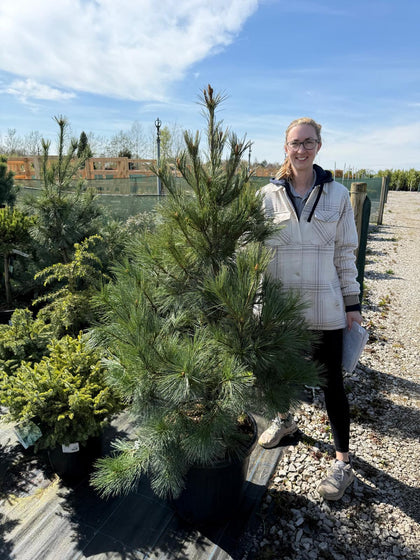
Taxus baccata 'Davisoniana' – A Compact Evergreen Shrub with Elegant Structure and Year-Round Interest
Taxus baccata 'Davisoniana', commonly known as English Yew 'Davisoniana', is a refined and compact evergreen shrub valued for its dense, formal shape and rich, dark green foliage. Its elegant form and tolerance to clipping make it a top choice for structured garden design, hedging, and topiary. Slow-growing but highly adaptable, 'Davisoniana' offers year-round greenery, subtle seasonal shifts in foliage tone, and occasional red berries that add a pop of colour and attract wildlife.
Seasonal Beauty & Growth
Spring:
-
New growth emerges in soft, lighter green tones that contrast beautifully with the mature dark green needles.
-
This subtle flush of colour brings life to the landscape and highlights the natural layering of the shrub’s dense foliage.
Summer:
-
The foliage deepens to a rich, glossy green, remaining lush and dense even in the hottest months.
-
Its tidy habit makes it perfect for formal hedging or as a backdrop to more colourful perennials and flowering shrubs.
Autumn:
-
Though evergreen, some gentle seasonal shifts in foliage tone can be observed.
-
On female plants, small red arils (berries) may appear—decorative and wildlife-friendly, though toxic if ingested.
Winter:
-
Retains its foliage year-round, providing valuable winter structure and greenery when most other plants are dormant.
-
Offers an elegant architectural presence in winter gardens, especially when used in clipped forms or topiary.
Structure & Form
-
Height & Spread: Typically reaches 2–4 meters tall with a similar spread over time, making it suitable for medium hedging or as a freestanding feature shrub.
-
Form: Naturally upright and bushy, with a dense, symmetrical habit that responds beautifully to pruning.
-
Growth Habit: Slow-growing, making it ideal for controlled garden spaces, borders, and classic hedge lines.
Perfect for Various Landscapes
-
Formal Gardens & Hedges: Perfect for classic English-style gardens and formal layouts where symmetry and structure are essential.
-
Topiary & Clipped Forms: Excellent for shaping into spheres, cones, or other creative forms due to its dense growth and tolerance of pruning.
-
Foundation Plantings: Works well as a backdrop or structure plant in mixed beds and borders.
-
Wildlife Gardens: Provides cover for small birds, especially when left untrimmed to produce berries.
Growing Conditions & Care
-
Position: Thrives in full sun to partial shade, with excellent tolerance for shaded spots in woodland or north-facing gardens.
-
Soil: Prefers well-drained, slightly alkaline to neutral soil, but is adaptable to a wide range of soil types.
-
Maintenance: Very low-maintenance once established. Prune in late spring or early autumn to shape or control size. Tolerates hard clipping and regenerates well from old wood.
-
Drought Tolerance: Once established, it is drought-tolerant, though young plants benefit from regular watering during dry spells.
Why Choose Taxus baccata 'Davisoniana'?
This evergreen shrub is an ideal choice for gardeners seeking year-round structure, versatility, and elegance. Its slow-growing, dense form makes it ideal for hedging, formal borders, or as a feature shrub. 'Davisoniana' combines classical beauty with modern reliability, offering seasonal interest, wildlife benefits, and exceptional garden value with minimal care.
Perfect Plant Combinations
-
Evergreens: Pair with other structured evergreens like Buxus sempervirens (Boxwood) or Ilex crenata for formal garden compositions.
-
Flowering Perennials: Underplant with perennials like Geranium, Helleborus, or Heuchera for colour contrast and seasonal variety.
-
Grasses & Textural Plants: Soften the formality with grasses like Carex or Festuca glauca to create movement and contrast.
-
Spring Bulbs: Combine with snowdrops, daffodils, or tulips to add seasonal pops of colour around its evergreen base.
Taxus baccata 'Davisoniana' is a time-tested, elegant shrub that provides dependable structure, style, and serenity in any garden. Whether used as a clipped hedge, a focal point in formal borders, or a green canvas for seasonal highlights, it is a truly versatile and distinguished addition to the landscape.