

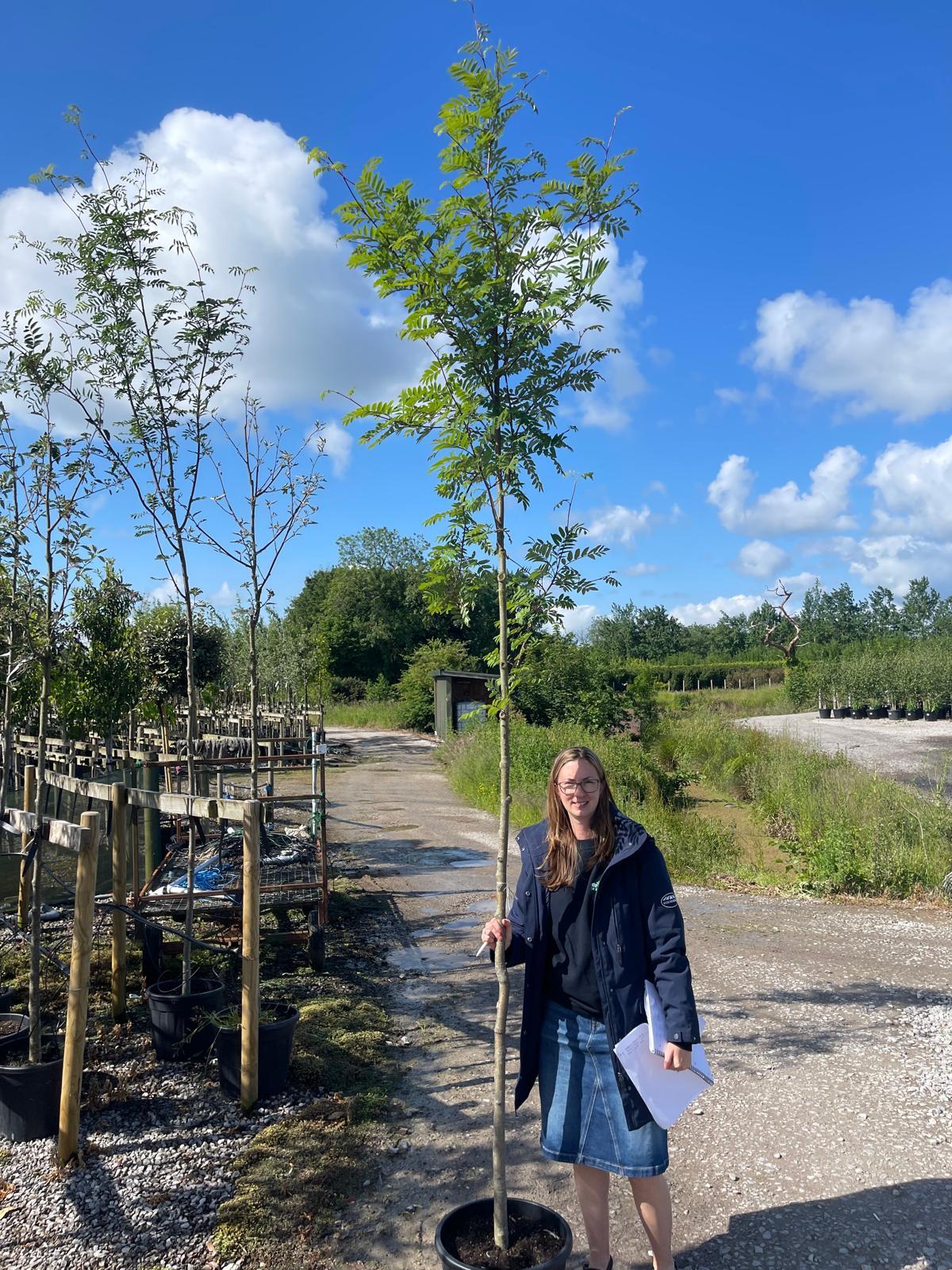
About Sorbus Aucuparia Standard 10/12cm Girth
Sorbus aucuparia – Common Rowan / Mountain Ash
Standard | 10–12 cm Girth
A Hardy Native Tree with Feathery Foliage, Creamy Flowers & Bright Red Berries
Sorbus aucuparia, commonly known as the Rowan or Mountain Ash, is a UK native deciduous tree admired for its graceful form, fine, feathery foliage, creamy white flowers in spring, and vivid clusters of red-orange berries in late summer and autumn. This standard tree, supplied at a 10–12 cm girth, provides instant height, structure, and ecological value, making it a top choice for woodland edges, wildlife gardens, and amenity landscapes.
Seasonal Interest
Spring
-
Leaf buds burst into elegant, pinnate green foliage.
-
In May, the tree is adorned with flat, creamy-white flower heads, highly attractive to bees and pollinators.
Summer
-
The foliage remains lush and finely textured, creating a light, dappled canopy.
-
Berry clusters begin forming and ripen through summer.
Autumn
-
Bright red-orange berries ripen fully by late summer and attract birds like thrushes and blackbirds.
-
Foliage takes on yellow, orange, and russet tones, contributing to a fiery autumn display.
Winter
-
Once leaves fall, the tree maintains a light, upright silhouette, while any remaining berries add a splash of seasonal colour.
Structure & Form
-
Height & Spread: Reaches 8–12 m tall × 4–6 m wide at maturity.
-
Girth: Supplied as 10–12 cm girth Standard with a clear stem of approx. 1.8–2.2 m and a well-developed, balanced crown.
-
Form: Upright with a naturally rounded head and airy canopy.
-
Growth Rate: Moderate to fast-growing; generally forms a tidy structure without extensive pruning.
Landscape Uses
-
Native & Wildlife Gardens: Excellent for supporting biodiversity; provides nectar, berries, and nesting opportunities.
-
Urban & Rural Sites: Adaptable to both street and countryside settings.
-
Orchard & Woodland Margins: Pairs well with fruit trees and other native species.
-
Specimen Planting: Attractive year-round form and colour make it ideal as a standalone feature.
-
Rewilding & Ecological Projects: Valuable pioneer species for mixed-woodland schemes and hedgerow enrichment.
Growing Conditions
-
Position: Prefers full sun to light shade.
-
Soil: Very adaptable—thrives in most well-drained soils including sandy, loamy, or clay; tolerates acidic and alkaline conditions.
-
Hardiness: Fully hardy across the UK (H7); withstands wind, cold, and exposed conditions.
-
Maintenance: Very low-maintenance. Occasional light pruning to maintain form or remove damaged wood.
Why Choose Sorbus aucuparia (10–12 cm Standard)?
As a UK native with deep cultural and ecological roots, Sorbus aucuparia brings timeless beauty and biodiversity to gardens and landscapes. This 10–12 cm standard form is ideal for designers, developers, and homeowners seeking an immediate presence, native planting compliance, or year-round interest with low input.
It is pollinator-friendly, bird-attracting, and thrives even in challenging locations, including high altitudes and poor soils.
Recommended Companions
-
Native Shrubs: Cornus sanguinea, Corylus avellana, or Viburnum opulus.
-
Underplanting: Combine with native bulbs like Bluebells, Wild Garlic, and Wood Anemone.
-
Other Trees: Pair with Betula pendula, Crataegus monogyna, or Malus sylvestris for native woodland effects.
Plants well with
Our growers' picks to plant alongside Sorbus Aucuparia Standard 10/12cm Girth for a fuller, longer-lasting display.
-
Amelanchier Laevis Ballerina 12 Litre Pot 80-100cm
Amelanchier laevis 'Ballerina'Full sunDeciduousGetting lowRegular price £55.50Regular price
