


About Salvia Hot Lips 2 Litre Pot
Salvia microphylla 'Hot Lips' – The Show-Stopping Bicolour Sage with Months of Bold Blooms
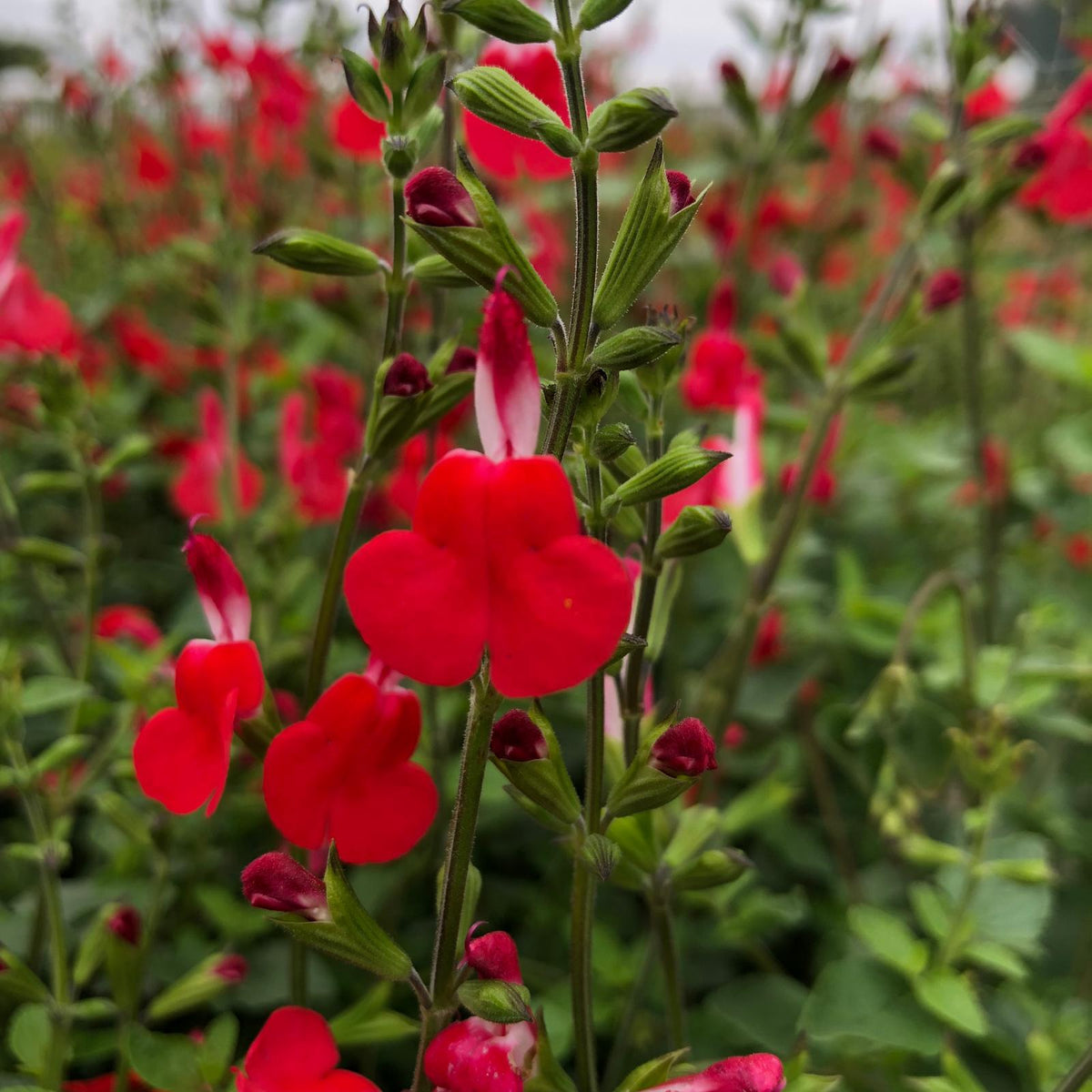
Salvia microphylla 'Hot Lips' is one of the most eye-catching and instantly recognisable ornamental sages, beloved for its striking red and white bicolour flowers that appear in abundance from late spring through to the first frosts of autumn. Each tubular bloom is boldly divided between vivid scarlet and pure white, creating a theatrical two-tone display that draws the eye — and the pollinators — from across the garden. The aromatic, small mid-green leaves add a pleasant fragrance when brushed, completing the sensory appeal of this outstanding shrub.
Compact, free-flowering, and remarkably easy to grow, 'Hot Lips' is equally at home in a sunny border, a gravel garden, or a generous patio container. A truly versatile performer, it delivers colour and character from season to season with very little fuss.
Why Grow Salvia microphylla 'Hot Lips'?
Spectacular Bicolour Flowers – The vivid red and white blooms are unique and instantly striking, providing a bold focal point in any sunny planting scheme.
Exceptionally Long Flowering Season – Flowers continuously from late spring right through to autumn, offering months of reliable colour and interest.
Outstanding Pollinator Appeal – Irresistible to bees, butterflies, and hummingbird hawk-moths, making it a superb choice for wildlife-friendly and nectar-rich gardens.
Aromatic Foliage – The small, neat leaves release a pleasant, faintly fruity fragrance when touched, adding a sensory dimension beyond the flowers alone.
Drought Tolerant Once Established – Well suited to drier conditions and low-water gardens once it has settled in, reducing the need for regular irrigation.
Low Maintenance – A tough, resilient shrub that asks for very little beyond an annual tidy and a sunny position to perform at its best.
Where to Site Your Salvia microphylla 'Hot Lips'
Aspect and Position – 'Hot Lips' thrives in a full sun position, where it will flower most prolifically and maintain its compact, bushy habit. A south- or west-facing spot sheltered from cold, drying winds is ideal. It will tolerate light, dappled shade but flowering will be reduced.
Soil – Prefers well-drained, light to moderately fertile soil. It performs particularly well in sandy, loamy, or gravelly soils that do not become waterlogged in winter. Heavy, poorly drained clay soils should be improved with grit and organic matter before planting. Like most Mediterranean-origin salvias, it dislikes sitting in cold, wet conditions.
Its bold blooms and bushy form make it a natural choice for:
Sunny mixed borders and cottage-style planting schemes
Gravel and Mediterranean-inspired garden designs
Patio containers and raised beds
Wildlife and pollinator gardens
Informal hedging or low screening alongside paths and boundaries
How to Grow and Care for Salvia microphylla 'Hot Lips'
Watering – Water regularly during the first growing season to help the plant establish a strong root system. Once mature, 'Hot Lips' is notably drought tolerant and will only need supplementary watering during prolonged dry spells in summer.
Feeding – A light application of a balanced, slow-release fertiliser in spring will support healthy growth and abundant flowering. Avoid overly rich feeding, which can encourage leafy growth at the expense of blooms.
Deadheading – Regular deadheading of spent flower spikes encourages the plant to produce fresh flushes of bloom throughout the season and keeps the overall appearance neat and tidy.
Pruning – In early to mid-spring, once the risk of hard frosts has passed, cut the plant back by around a third to a half to remove any winter-damaged or straggly growth and stimulate vigorous new shoots. Avoid cutting back into old, woody stems, as salvias can be reluctant to regenerate from very old wood. A light trim after the main summer flowering flush will also help to maintain a compact shape and promote a second wave of flowers into autumn.
Winter Care – 'Hot Lips' is hardy in mild and sheltered gardens, tolerating temperatures down to approximately -5°C to -10°C, but it is best given some protection in colder regions. In autumn, apply a generous mulch of garden compost or bark chippings around the base to insulate the roots. In exposed or frost-prone gardens, consider growing it in a container that can be moved to a frost-free greenhouse or porch over winter.
Colour Variation – An interesting characteristic of 'Hot Lips' is that its flower colour can shift with temperature. In cooler conditions, particularly in spring and autumn, blooms may appear almost entirely red; in the heat of midsummer, the classic bicolour pattern of red and white is most prominent. Both expressions are equally charming.
Perfect Planting Combinations
The bold red and white of 'Hot Lips' combines beautifully with silver and grey foliage plants such as Artemisia, Stachys byzantina, or Perovskia for a classic Mediterranean feel. For a vibrant, high-energy border, pair it with other sun-loving perennials including Verb
Plants well with
Our growers' picks to plant alongside Salvia Hot Lips 2 Litre Pot for a fuller, longer-lasting display.
-
Stipa Tenuissima Pony Tails 2 Litre Pot
Stipa tenuissima 'Pony Tails'Full sunDeciduousIn stockRegular price £4.75Regular price -
Echinacea Purpurea Magnus 2 Litre Pot
Echinacea purpureaFull sunDeciduousIn stockRegular price £4.35Regular price

