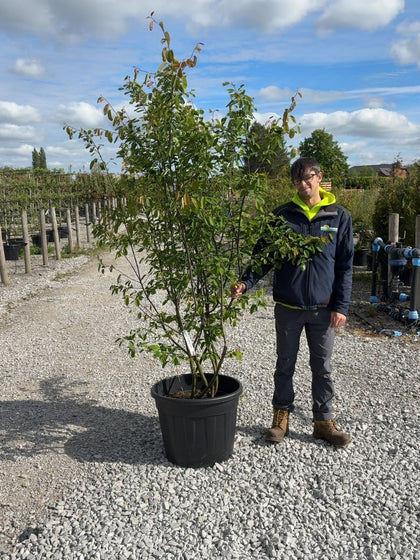
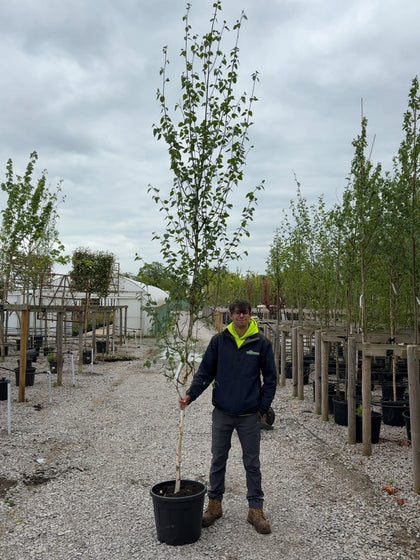
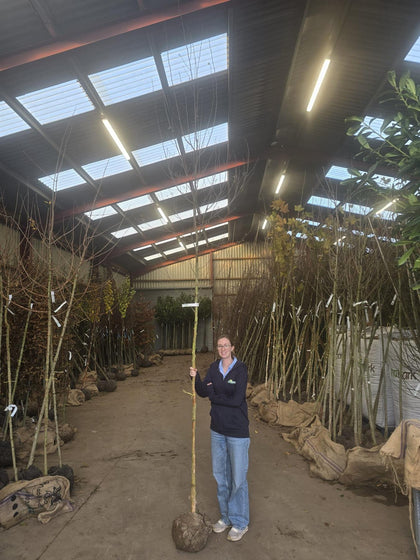
Magnolias are deciduous or evergreen shrubs commonly found in woodlands or along river banks. They are grown for their showy, erect flowers which come in a wide range of colours from white to purple. Leaves are borne after the flowers and are ovate and alternate. Magnolias also bear cone-like, red seeds which are very attractive in Autumn.
Magnolia Kobus are prized for its beautiful spring flowers, graceful shape, and hardiness, it is well-suited to gardens and landscapes due to its ability to thrive in cooler climates and offer stunning ornamental value. Offers year-round beauty and interest. Its long life span, wildlife value, and environmental benefits further enhance its appeal, making it a lasting and impactful tree for any garden.
- One of the main reasons to plant Magnolia kobus is its stunning spring display of fragrant, pure white flowers. Blooming in early spring (March to April), often before the leaves emerge, the tree produces large, cup-shaped flowers, the flowers have a light, pleasant fragrance, adding an extra sensory dimension to the early spring garden. These blooms create a breathtaking spectacle in the garden, particularly when many other plants are still dormant.
- After the flowers fade, the tree develops glossy, dark green leaves that remain attractive throughout the growing season. The leaves provide a lush canopy that can offer shade and contribute to the garden's structure during summer. In autumn, the leaves turn a pleasant yellow, adding another season of interest before they fall, contributing to the tree's appeal as a multi-season ornamental plan
- During winter, the tree’s smooth, grey bark and elegant branching structure remain visually interesting, especially when silhouetted against the winter sky.
Magnolias prefers slightly acidic to neutral, well-drained soils, but it is relatively adaptable to different soil types as long as they are not too wet or compacted. It can grow in sandy, loamy, or clay soils, making it versatile for various garden settings. Kobus prefers full sun to partial shade, it is more tolerant of light shade than some other magnolia species. This flexibility allows it to be planted in a variety of garden settings, including slightly shaded areas under larger trees or near buildings where it might not receive full sun all day.