

Corylus Maxima Purpurea 20 Litre Pot
Corylus Maxima Purpurea 20 Litre Pot
Couldn't load pickup availability

About Corylus Maxima Purpurea 20 Litre Pot
Corylus maxima ‘Purpurea’ – Purple-Leaved Hazel with Seasonal Interest
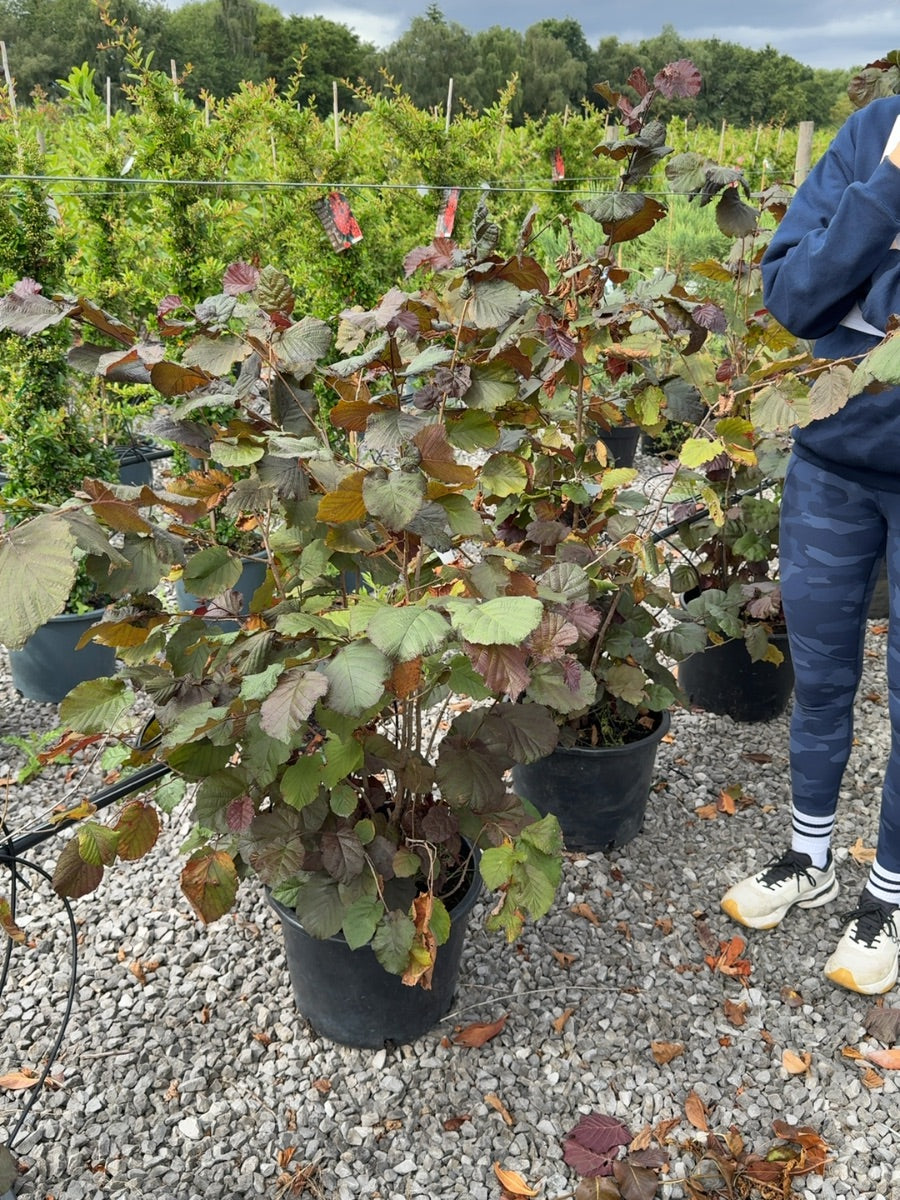
Corylus maxima ‘Purpurea’, commonly known as Purple Hazel, is a striking deciduous shrub or small tree valued for its deep purple foliage and ornamental seasonal features. The large rounded leaves emerge rich burgundy-purple in spring, maintaining strong colour through much of the growing season before gradually softening to bronze and greenish tones later in the year.
Its naturally bushy, multi-stemmed habit makes it ideal for screening, woodland planting, and mixed shrub borders, where the dark foliage creates dramatic contrast against lighter planting schemes.
In late winter to early spring, long decorative yellow catkins appear along the bare branches, adding valuable early-season interest before the leaves emerge. Mature plants may also produce edible hazelnuts in autumn, enclosed in attractive reddish husks.
Hardy and easy to grow, Purple Hazel thrives in sun or partial shade and performs well in most fertile, well-drained soils. Its vigorous growth and tolerance of pruning make it suitable for informal hedging and larger landscape planting.
Bold, versatile, and full of seasonal character, Corylus maxima ‘Purpurea’ is an excellent choice for adding foliage contrast and wildlife value to the garden.
Seasonal Highlights
Winter: Decorative yellow catkins appear on bare branches.
Spring: Rich purple foliage emerges strongly.
Summer: Dense dark foliage provides contrast and screening.
Autumn: Edible hazelnuts and warm foliage tones develop.
Key Features
Purple foliage – Rich seasonal leaf colour.
Decorative catkins – Early seasonal interest.
Edible hazelnuts – Ornamental and productive.
Bushy habit – Excellent screening plant.
Wildlife friendly – Supports birds and pollinators.
Perfect For
Screening – Dense informal boundary planting.
Woodland gardens – Naturalistic schemes.
Feature foliage planting – Strong colour contrast.
Mixed hedging – Adds seasonal interest.
Wildlife gardens – Habitat and food source.
Growing Tips
Sun/Position: Sun or partial shade.
Soil: Fertile, well-drained soil preferred.
Hardiness: Fully hardy in the UK.
Care: Prune lightly if required to maintain shape and encourage fresh growth.
Looks Great With
Birch trees – Contrasting bark and foliage.
Cornus – Strong winter stem colour combinations.
Evergreens – Enhances purple foliage tones.
Grasses – Softens larger planting schemes.
Native hedging – Wildlife-friendly planting combinations.
Plants well with
Our growers' picks to plant alongside Corylus Maxima Purpurea 20 Litre Pot for a fuller, longer-lasting display.
-
Helleborus Hyb.Harvington Red 2 Litre Pot
Helleborus × hybridus Harvington redFull sunEvergreenGetting lowRegular price £7.50Regular price -
Cornus Kelseyi 2 Litre Pot
Cornus sericea 'Kelseyi'Full sunDeciduousIn stockRegular price £4.60Regular price -
Hamamelis Arnolds Promise 20 Litre Pot 125/150cm Tall
Hamamelis × intermedia 'Arnold Promise'Full sunDeciduousGetting lowRegular price £165.00Regular price


