

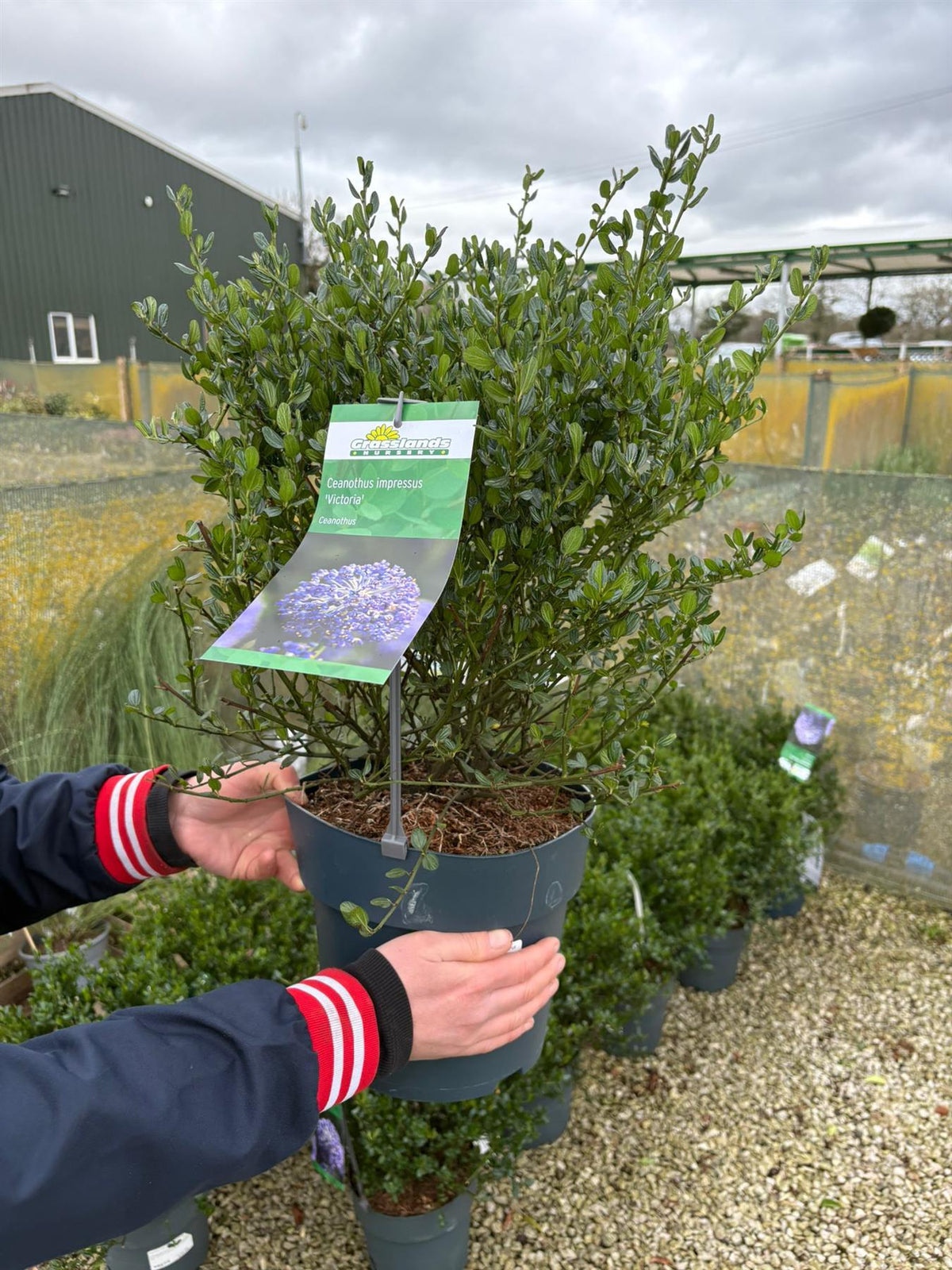
About Ceanothus Impressus Victoria 6 Litre Pot
Ceanothus impressus ‘Victoria’ – A Striking Evergreen with Brilliant Blue Spring Flowers
Ceanothus impressus ‘Victoria’ is a vigorous evergreen shrub renowned for its intense cobalt-blue flower clusters in late spring. Dense, glossy foliage provides year-round structure, while its abundant blooms attract bees and pollinators. Ideal for sunny borders, coastal gardens, and feature planting.
Ceanothus ‘Victoria’ is one of the most popular Californian lilacs, valued for its strong growth, reliable flowering, and adaptability. In late spring to early summer, it produces masses of deep blue flower clusters that contrast beautifully with its dark green, textured evergreen leaves. This variety is particularly noted for its hardiness compared to many other ceanothus types, making it a dependable choice in milder UK gardens.
Why Grow Ceanothus ‘Victoria’?
Brilliant Blue Flowers –
Produces abundant clusters of rich cobalt-blue blooms in late spring, creating a vibrant and eye-catching display.
Evergreen Structure –
Glossy, dark green leaves provide year-round interest and act as an attractive backdrop for the vivid flowers.
Excellent for Pollinators –
The nectar-rich flowers attract bees and other beneficial insects.
Fast Growing and Vigorous –
Quick to establish and capable of forming an impressive shrub or informal hedge.
Coastal Tolerant –
Performs well in coastal gardens, tolerating salt-laden air and exposed positions.
Height and Spread of Ceanothus ‘Victoria’
Typically grows to approximately 2–3m in height with a similar spread of 2–3m, forming a large, dense shrub if left unpruned.
Where to Site Your Ceanothus ‘Victoria’
Sunny Borders:
Thrives in a warm, sheltered position with full sun for best flowering.
Wall-Side Planting:
Ideal against a south- or west-facing wall for added protection.
Coastal Gardens:
Handles maritime exposure well, making it perfect for seaside locations.
Informal Hedges or Screens:
Can be used as a flowering evergreen hedge in suitable climates.
How to Grow and Care for Ceanothus ‘Victoria’
Soil –
Prefers well-drained soil. Tolerates poor to moderately fertile soils but dislikes heavy, waterlogged conditions.
Light –
Requires full sun for optimal flowering and dense growth.
Watering –
Water regularly while establishing. Once established, it is relatively drought tolerant.
Maintenance
Feeding –
Generally does not require heavy feeding. Avoid excessive fertiliser, which can reduce flowering.
Pruning –
Lightly trim after flowering to maintain shape and encourage bushiness. Avoid cutting into old wood.
Mulching –
Apply a light mulch in spring, keeping it away from the base of the stem.
Pest & Disease Resistance –
Generally trouble-free, though poor drainage can lead to root problems.