


Big Deal Yew Hedging 120/140cm Root Ball x 20 Delivery October
Big Deal Yew Hedging 120/140cm Root Ball x 20 Delivery October

Couldn't load pickup availability


About Big Deal Yew Hedging 120/140cm Root Ball x 20 Delivery October
Yew Hedging (Taxus baccata) – 120/140cm Root Ball
Classic Evergreen Hedging with Timeless Elegance and Year-Round Structure
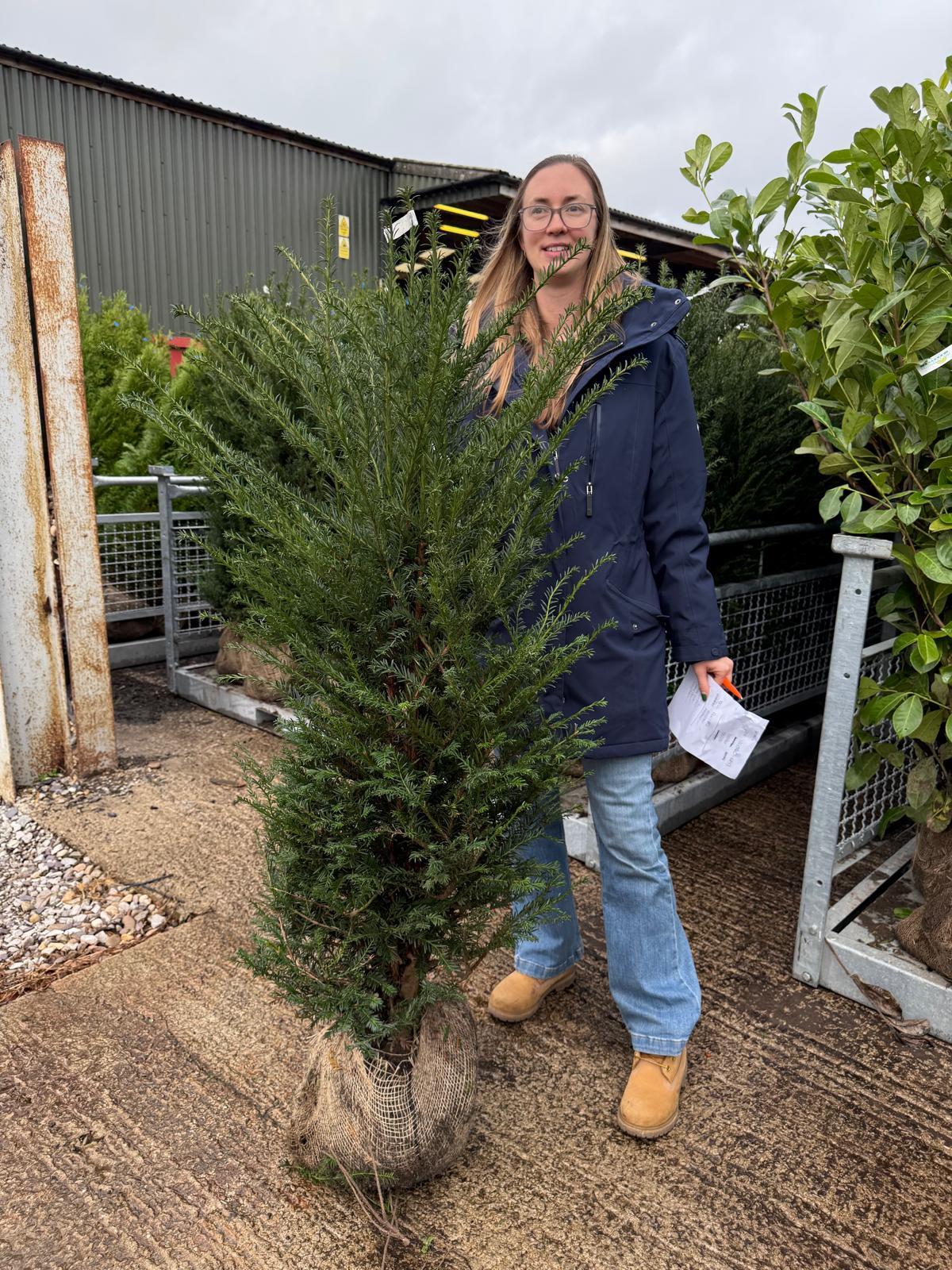
Yew (Taxus baccata) is the quintessential British evergreen hedge, renowned for its formal beauty, dense growth, and exceptional longevity. Supplied as a 120–140cm tall root ball, these field-grown plants are ideal for establishing mature, structured hedging with immediate presence.
With its rich, dark green needle-like foliage and strong, upright form, Yew offers an unbeatable blend of elegance and practicality. It clips beautifully for formal shapes and topiary, but also performs wonderfully in informal mixed boundaries or as a backdrop to flowering plants. Incredibly hardy, tolerant of shade, and long-lived, it remains the go-to choice for traditional garden design.
Seasonal Interest
Spring:
Fresh new shoots add soft green contrast to the darker mature foliage. Plants settle in and begin active growth.
Summer:
Dense, lush greenery provides excellent privacy and wind protection. A great time for light trimming to shape.
Autumn:
Tiny red berries may appear on female plants, providing wildlife interest and subtle colour.
Winter:
Remains fully evergreen with strong visual presence, offering windbreak, screening, and architectural form.
Key Features
-
Supplied Height: 120–140cm (approx. 4–4.5ft)
-
Foliage: Fine, dark green needle-like leaves; dense and evergreen
-
Growth Rate: Slow to moderate – approx. 20–30cm per year
-
Ultimate Height: Can reach 4–6m if left untrimmed
-
Form: Naturally bushy and upright; responds very well to clipping
-
Root Ball: Field-grown for strong roots and superior establishment
Ideal Uses
-
Formal Evergreen Hedges: Sharp lines and topiary-style shaping
-
Privacy & Screening: Dense growth creates year-round seclusion
-
Boundary Definition: Traditional look for driveways and borders
-
Shade Tolerance: Performs well even in partially shaded areas
-
Wildlife Support: Berries feed birds; dense cover offers nesting habitat
Planting & Care
-
Position: Full sun to partial or even full shade
-
Soil: Well-drained soils preferred; avoid waterlogging
-
Spacing: 2–3 plants per metre for a dense hedge
-
Watering: Keep well-watered for the first 1–2 growing seasons
-
Feeding: Use a balanced fertiliser in spring
-
Pruning: Prune once or twice a year for shape and density; very responsive to cutting
Why Choose Yew Hedging?
-
Formal Elegance: The ultimate choice for structured, classic gardens
-
Evergreen All Year: Provides winter structure and privacy
-
Long-Lasting Investment: With proper care, Yew hedges can last generations
-
Versatile and Hardy: Tolerates sun, shade, and varied soil conditions
-
Wildlife Friendly: Berries (on females) and thick cover benefit garden biodiversity
Plants well with
Our growers' picks to plant alongside Big Deal Yew Hedging 120/140cm Root Ball x 20 Delivery October for a fuller, longer-lasting display.
-
Carpinus betulus Fastigiata - Hornbeam Tree 5 Litre Pot
Carpinus betulusFull sunDeciduousIn stockRegular price £12.00Regular price
