


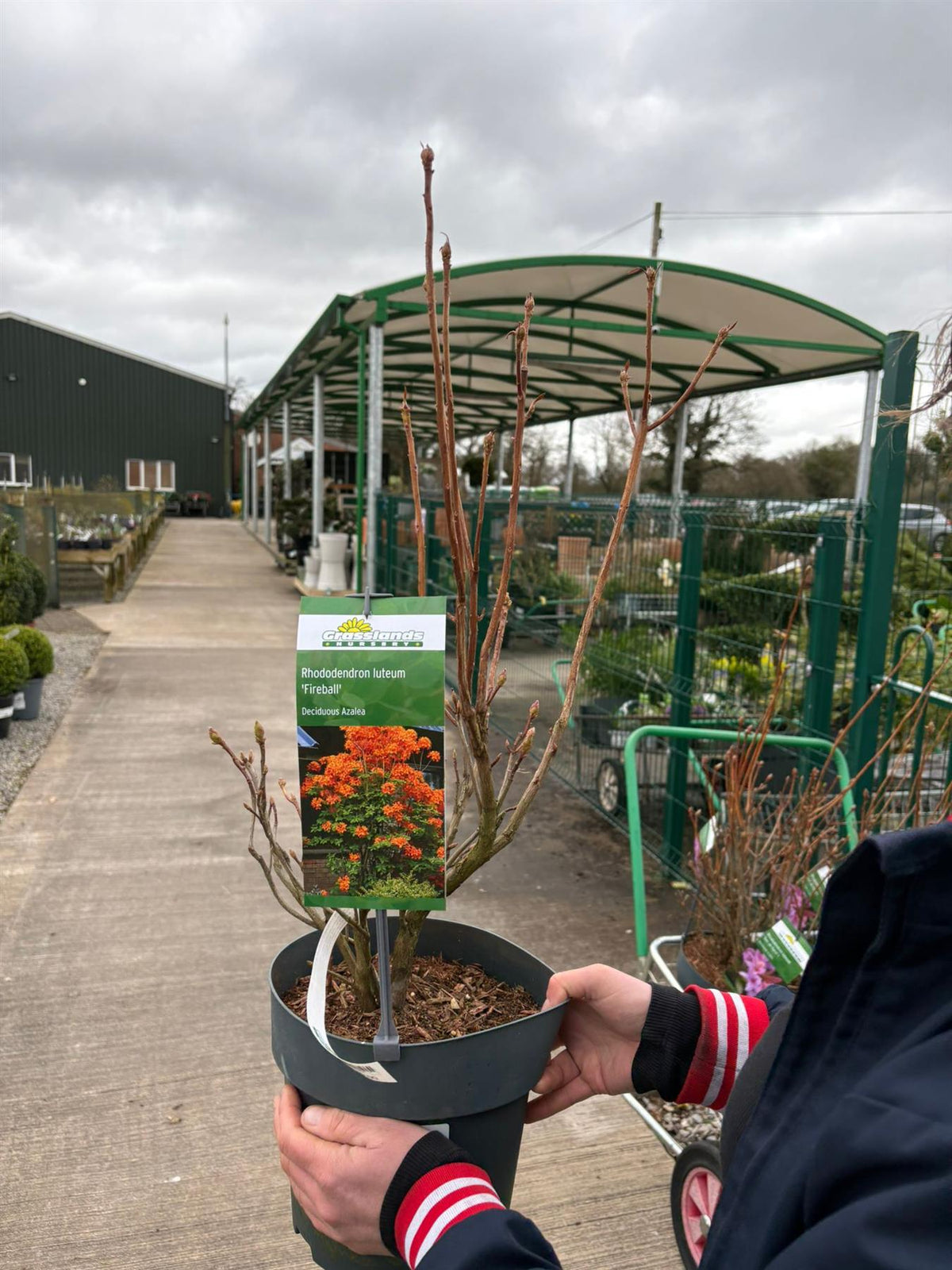
About Azalea luteum Fireball 4.6 Litre Pot
Azalea luteum ‘Fireball’ – A Fragrant Deciduous Azalea with Fiery Spring Colour
Azalea luteum ‘Fireball’ is a striking deciduous azalea celebrated for its intensely coloured spring flowers and strong fragrance. In late spring, its vivid orange-red blooms create a dramatic display, lighting up borders and woodland gardens before the fresh green foliage fully emerges.
This hardy azalea also delivers excellent autumn interest, with foliage turning rich shades of orange, red, and gold before leaf fall.
Why Grow Azalea luteum ‘Fireball’?
Fiery, Fragrant Flowers
In late spring, ‘Fireball’ produces large trusses of orange-red, flame-coloured flowers with a rich, sweet fragrance. The bold colouring makes it a standout feature in borders and woodland settings.
Attractive Seasonal Foliage
Bright green leaves emerge after flowering and form a dense, leafy shrub through summer. In autumn, the foliage transforms into glowing shades of red, orange, and yellow, extending its seasonal appeal.
Upright, Bushy Growth Habit
This variety forms a well-branched, upright shrub, typically reaching 1.5–2 m in height, making it ideal for mixed borders or as a focal point in ericaceous planting schemes.
Hardy and Reliable
Azalea luteum ‘Fireball’ is fully hardy and thrives in cooler climates. When planted in suitable acidic soil, it is long-lived, reliable, and easy to maintain.
Height and Spread
Typically grows 1.5–2 m tall, with a similar spread.
Where to Site Your Azalea luteum ‘Fireball’
-
Woodland and shrub borders, with dappled shade
-
Ericaceous beds, alongside rhododendrons and camellias
-
Feature planting, where colour and fragrance can be appreciated
-
Wildlife gardens, attracting pollinators
How to Grow and Care
Soil
Requires acidic, humus-rich, well-drained soil. Improve planting areas with leaf mould or ericaceous compost.
Light
Thrives in partial shade, though it will tolerate full sun in cooler, sheltered positions.
Watering
Keep soil evenly moist, especially during establishment and dry periods. Avoid waterlogging.
Maintenance
Pruning: Minimal; remove spent flower trusses and lightly shape after flowering.
Mulching: Apply an annual mulch of leaf mould or bark to retain moisture and maintain acidity.
Pests & Diseases: Generally trouble-free in suitable conditions.
Perfect Plant Combinations
-
Rhododendrons and camellias for spring displays
-
Spring bulbs such as Narcissus and Bluebells
-
Ferns and hostas for woodland texture
-
Evergreen shrubs for year-round structure
Plants well with
Our growers' picks to plant alongside Azalea luteum Fireball 4.6 Litre Pot for a fuller, longer-lasting display.
-
Camellia Japonica Comte De Gomer 1.5 Litre Pot
Camellia japonica 'Comte de Gomer'EvergreenIn stockRegular price £17.95Regular price -
Pieris Japonica Flaming Silver 7.5 Litre Pot
Pieris japonica 'Flaming Silver'EvergreenIn stockRegular price £40.50Regular price -
Magnolia Black Tulip 20 Litre Pot 125-150cm
Magnolia Black Tulip ('Jurmag1')Full sunDeciduousGetting lowRegular price £171.00Regular price -
Skimmia Japonica Rubella 1.5 Litre Pot
Skimmia Japonica RubellaEvergreenIn stockRegular price £18.20Regular price


