

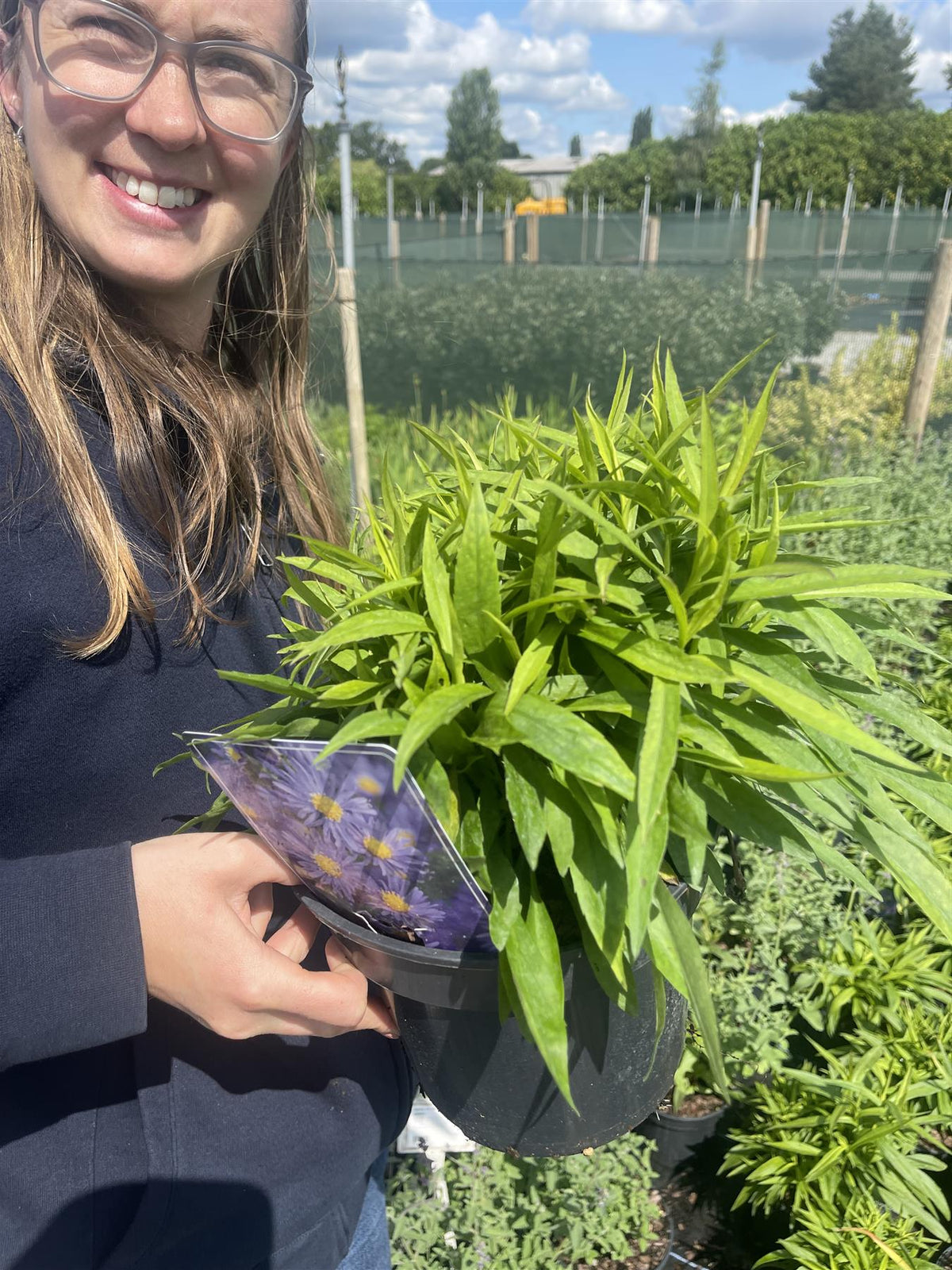
About Aster d. Lady in Blue 3 Litre Pot
Aster dumosus ‘Lady in Blue’ – A Compact Cloud of Soft Lavender-Blue Blooms
Aster dumosus ‘Lady in Blue’ is a charming, compact Michaelmas daisy that bursts into bloom in late summer and autumn, covering itself in a profusion of soft lavender-blue flowers with golden-yellow centres. This bushy, low-growing perennial provides a valuable splash of colour just as many other plants begin to fade. Perfect for borders, containers, and pollinator-friendly gardens, ‘Lady in Blue’ is a reliable, easy-to-grow variety that attracts bees and butterflies while offering long-lasting beauty.
Why Grow Aster dumosus ‘Lady in Blue’?
Abundant Lavender-Blue Blooms – A sea of delicate, daisy-like flowers creates a dreamy, late-season display.
Pollinator Magnet – A rich nectar source for bees and butterflies, helping to support wildlife into autumn.
Neat & Compact Growth – Forms a tidy, bushy mound, making it ideal for smaller gardens, edging, and patio containers.
Long Flowering Period – Blooms from late summer well into autumn, extending seasonal interest.
Hardy & Low-Maintenance – Fully hardy and easy to care for, with strong resistance to mildew.
Planting & Care Guide
Position – Prefers full sun but will tolerate light shade. Best in borders, cottage gardens, and container displays.
Soil – Thrives in moist, well-drained soil, though it adapts well to most garden conditions.
Watering – Water regularly when establishing; once mature, it is relatively drought-tolerant.
Maintenance:
- Deadhead spent blooms to encourage continuous flowering.
- Cut back in late autumn after flowering to maintain a tidy habit.
- Divide clumps every few years to ensure healthy growth and prevent overcrowding.
Perfect Plant Combinations
Aster ‘Lady in Blue’ pairs beautifully with other late-season perennials such as Rudbeckia, Sedum, and Echinacea, creating a striking autumnal display. It also works well alongside ornamental grasses like Miscanthus and Panicum, adding movement and texture. For a classic cottage garden feel, mix with Salvia, Verbena bonariensis, and Nepeta.