

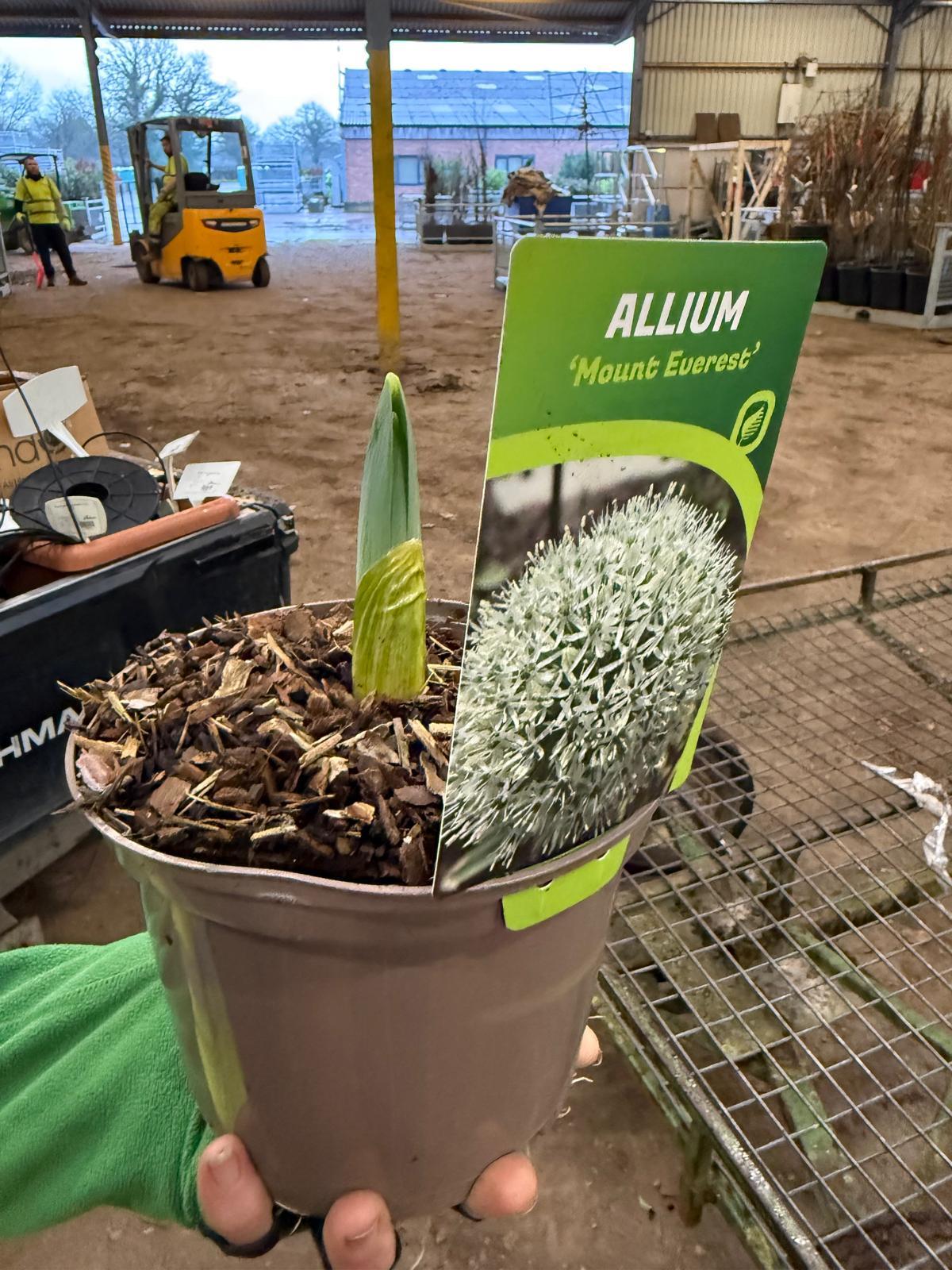
About Allium Mont Everest 2 Litre Pot
Allium ‘Mount Everest’ – Tall White Flower Spheres for Striking Spring Contrast
Allium ‘Mount Everest’ is a dramatic and elegant ornamental onion, producing large, globe-shaped flower heads in crisp, pure white. Flowering in late spring, the rounded blooms sit proudly atop tall, sturdy stems, creating bold vertical accents within borders.
The luminous white spheres stand out beautifully against darker foliage and richly coloured perennials, making this variety especially effective in contemporary or monochrome planting schemes. Planted in groups, it creates a rhythmic, architectural effect that brings cohesion and height to mixed borders.
Highly attractive to bees and other pollinators, ‘Mount Everest’ combines strong visual presence with ecological value. The blooms are long-lasting and can be left to form decorative seed heads, extending interest into early summer.
Thriving in full sun and well-drained soil, this hardy allium is reliable and low maintenance. Once established, it returns year after year, providing consistent late spring structure and colour.
Clean, architectural, and wonderfully versatile, Allium ‘Mount Everest’ is ideal for gardeners seeking tall white statement flowers with dependable performance.
Seasonal Highlights
Spring: Upright foliage emerges.
Late Spring: Large white spherical blooms open.
Early Summer: Seed heads add structure.
Winter: Bulbs remain dormant underground.
Key Features
Pure white flower heads – Bright, clean colour.
Tall, upright stems – Adds height to borders.
Architectural form – Strong structural impact.
Pollinator-friendly – Excellent for bees.
Hardy and reliable – Easy to grow.
Perfect For
Mixed borders – Back-of-border structure.
White gardens – Luminous seasonal highlight.
Contemporary planting – Clean, defined lines.
Wildlife gardens – Nectar-rich blooms.
Cutting gardens – Fresh or dried arrangements.
Growing Tips
Sun/Position: Full sun.
Soil: Free-draining soil; avoid winter wet.
Hardiness: Fully hardy across the UK.
Care: Plant bulbs in autumn at around 15–20cm deep; allow foliage to die back naturally.