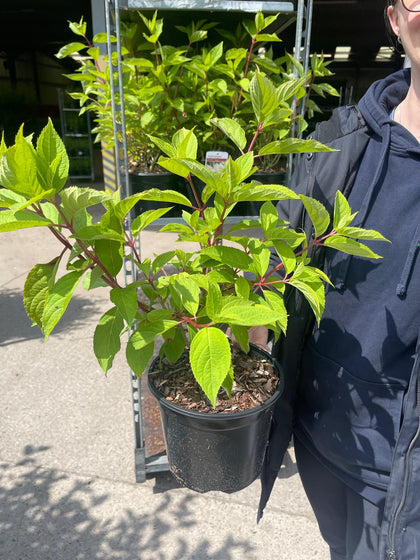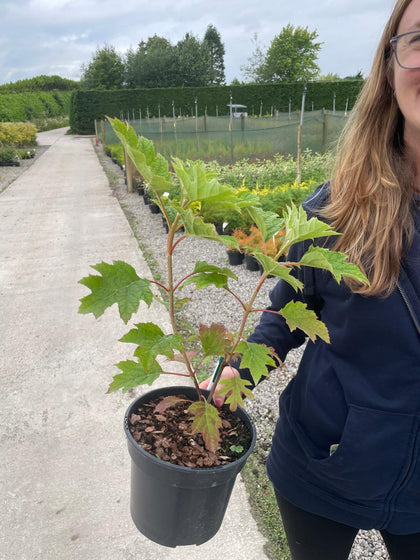
Hydrangea serrata ‘Pink Petticoat’ – A Delicate Lacecap with Layers of Soft Pink Blooms
Hydrangea serrata ‘Pink Petticoat’ is a charming, compact lacecap hydrangea producing layers of soft pink flowers in summer. Its refined form and serrated foliage make it ideal for borders, woodland gardens, and containers, adding romantic colour to lightly shaded spaces.
Hydrangea ‘Pink Petticoat’ is prized for its elegant, double lacecap blooms that resemble ruffled petticoats. Flowering from early to late summer, the plant produces flattened flowerheads with central fertile florets surrounded by layers of decorative pink outer petals. In acidic soils, tones may deepen slightly, while neutral soils maintain its soft pink hues. Its compact size and graceful habit make it perfect for smaller gardens.
Why Grow Hydrangea ‘Pink Petticoat’?
Unique Double Lacecap Flowers –
Distinctive layered blooms create a delicate, ruffled appearance that stands out from traditional hydrangeas.
Soft Romantic Colouring –
Produces gentle pink tones that complement cottage-style and woodland planting schemes.
Compact Growth Habit –
Neat and manageable, ideal for smaller borders and container displays.
Long Flowering Period –
Blooms from early summer into late summer, providing extended seasonal interest.
Good Shade Tolerance –
Thrives in partial shade, brightening sheltered garden areas.
Height and Spread of Hydrangea ‘Pink Petticoat’
Typically grows to approximately 80–120cm in height with a similar spread of 80–120cm, forming a rounded, bushy shrub.
Where to Site Your Hydrangea ‘Pink Petticoat’
Woodland Gardens:
Ideal in dappled shade beneath trees or in sheltered borders.
Mixed Borders:
Adds soft texture and colour among ferns, hostas, and other shade-loving plants.
Containers:
Performs well in large pots filled with moisture-retentive compost.
Cottage Gardens:
Complements romantic planting schemes with roses and soft perennials.
How to Grow and Care for Hydrangea ‘Pink Petticoat’
Soil –
Prefers moist, well-drained, humus-rich soil. Tolerates slightly acidic to neutral conditions.
Light –
Best in partial shade. Avoid strong afternoon sun, which may scorch foliage.
Watering –
Keep soil consistently moist, especially during warm weather. Do not allow to dry out.
Maintenance
Feeding –
Apply a balanced fertiliser in spring to support healthy growth and flowering.
Pruning –
Lightly prune in early spring, removing dead or weak stems while preserving flower buds formed on previous year’s growth.
Mulching –
Apply organic mulch annually to retain moisture and enrich soil.
Pest & Disease Resistance –
Generally reliable, though young growth may occasionally attract aphids.