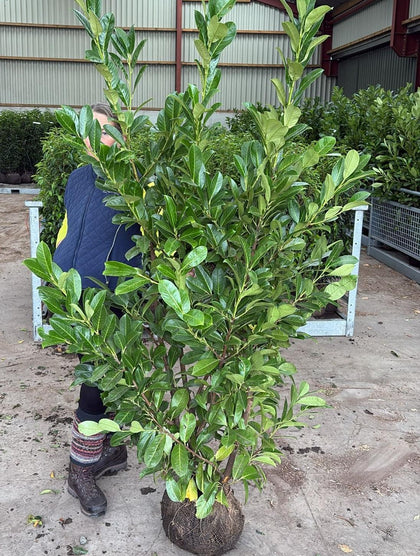
Cherry Laurel (Prunus laurocerasus) is a vigorous, evergreen shrub renowned for its bold, glossy foliage and exceptional versatility in the garden. Whether used as a formal clipped hedge, a dense privacy screen, or a specimen shrub in a mixed border, it delivers year-round structure and reliable performance in a wide range of conditions.
In spring, upright spikes of small, creamy-white flowers add seasonal interest, followed in autumn by clusters of dark, cherry-like fruits that are attractive to birds and other wildlife. Tough, fast-growing, and remarkably adaptable, Cherry Laurel is one of the most popular and dependable evergreen shrubs for UK gardens.
Key Features
Bold, large, glossy dark green leaves providing dense, year-round cover
Fast-growing and quick to establish for rapid results
Fragrant white flower spikes in spring, followed by wildlife-friendly dark fruits
Fully hardy and tolerant of shade, urban pollution, and exposed sites
Excellent for hedging, screening, topiary, or as a standalone specimen
Habit & Appearance
Foliage & form: Prunus laurocerasus produces large, leathery, oblong leaves with a distinctive high gloss on the upper surface. The dense, spreading habit makes it one of the most effective screening shrubs available, building quickly into a broad, rounded form when left unpruned.
Flowers & fruit: In mid to late spring, upright racemes of small white flowers emerge, lightly fragrant and attractive to bees and other pollinators. These are followed by clusters of small, dark purple-black fruits in late summer and autumn, providing an excellent food source for birds.
Ultimate size: Left unpruned, Cherry Laurel can reach 5–6m in height with a spread of 3–4m, though it is very easily maintained at a lower height with regular trimming.
Growing Conditions
Position: Highly adaptable, thriving in everything from full sun through to deep shade. It performs particularly well in sheltered spots but will also tolerate exposed and coastal positions once established.
Soil: Grows well in most soils, including clay, chalk, and sandy types, provided they are reasonably well-drained. It tolerates both moist and moderately dry conditions once established, making it a low-fuss choice for a wide range of garden situations.
Hardiness: Fully hardy throughout the UK, coping reliably with cold winters and frost without damage to its evergreen foliage.
Care & Pruning
Establishment: Water regularly during the first growing season to help the plant settle in and develop a strong root system. Once established, Cherry Laurel is largely self-sufficient and drought-tolerant.
Feeding: An annual application of a balanced, slow-release fertiliser in spring will encourage healthy, vigorous growth and keep the foliage looking lush and vibrant.
Pruning: For hedging and shaped specimens, trim once or twice a year — ideally in late spring after flowering, and again in late summer if a second cut is needed. Use secateurs rather than shears where possible to avoid cutting through the large leaves, which can cause browning at the cut edges. Established plants respond well to hard renovation pruning if they have become overgrown, breaking readily from old wood.
Prunus laurocerasus is a timeless, hardworking evergreen that earns its place in almost any garden. With its striking foliage, seasonal interest, and easy-going nature, Cherry Laurel remains one of the best all-round shrubs for privacy, structure, and year-round impact.