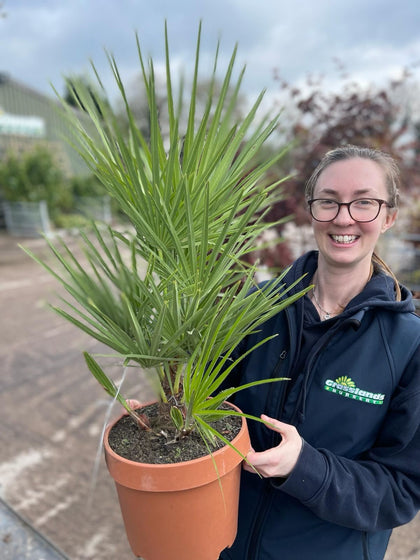
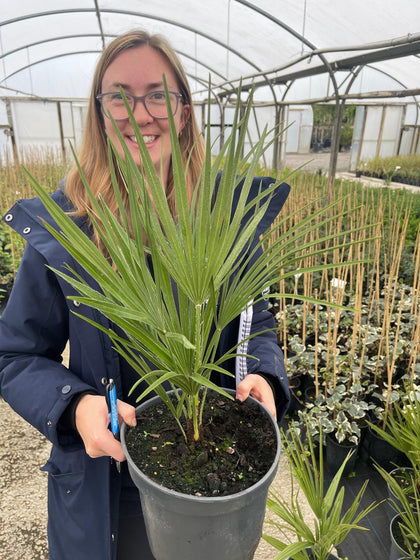
Chamaerops humilis – A Hardy Mediterranean Fan Palm with Architectural Appeal
Chamaerops humilis, commonly known as the European Fan Palm or Mediterranean Dwarf Palm, is a striking, slow-growing palm that brings an exotic yet surprisingly hardy presence to the garden. Native to the Mediterranean region, this attractive palm is valued for its bold, fan-shaped leaves, compact form, and excellent tolerance of cooler climates. It is one of the hardiest palms available, making it a popular choice for gardens, patios, and terraces across the UK and Europe.
With its clump-forming habit and distinctive silvery-green or deep green foliage, Chamaerops humilis adds year-round structure and a touch of southern charm wherever it is planted.
Why Grow Chamaerops humilis?
Hardy Exotic Appearance – Chamaerops humilis offers the look of a tropical palm while being much more cold-tolerant than most. It can withstand temperatures down to around -10°C to -12°C once established, making it suitable for many temperate gardens.
Beautiful Fan-Shaped Leaves – The stiff, palmate leaves form elegant fans that radiate from sturdy stems, creating strong architectural interest. Depending on the variety and growing conditions, the foliage may be rich green or have an attractive silvery-blue tint.
Compact and Clump-Forming – Unlike tall palms, Chamaerops humilis remains relatively compact and often forms multiple trunks over time. This makes it ideal for smaller gardens or for use in containers without overwhelming the space.
Evergreen Year-Round Interest – As an evergreen palm, it provides structure and greenery throughout the year, even in winter when many plants die back. Its bold form ensures it remains a focal point in all seasons.
Excellent for Containers – Its slow growth and compact size make Chamaerops humilis particularly well suited to pots. It thrives on patios, balconies, and terraces, where it can be moved to a more sheltered spot if needed during severe weather.
Height and Spread of Chamaerops humilis
Chamaerops humilis typically reaches a height of 2–4m over many years, though it is very slow-growing and remains much smaller for a long time, especially in containers. The spread is usually around 1.5–3m, forming a dense, rounded clump as multiple stems develop.
Where to Site Your Chamaerops humilis
This versatile palm suits a wide range of garden settings:
-
Mediterranean and Exotic Gardens: Ideal as a statement plant alongside other architectural plants such as Agave, Yucca, or Cordyline.
-
Patios and Terraces: Grows exceptionally well in large containers, adding height and drama to seating areas.
-
Sheltered Borders: Plant in a sunny, well-drained spot protected from cold, drying winds.
-
Coastal Gardens: Tolerant of wind and salt spray, making it an excellent choice for seaside locations.
-
Courtyards: Its compact form and bold shape work beautifully in enclosed or urban garden spaces.
How to Grow and Care for Your Chamaerops humilis
Soil – This palm thrives in free-draining soil. It tolerates poor, sandy, or rocky soils but dislikes waterlogged conditions. When planting in the ground, improve heavy soil with grit or sand. For containers, use a well-draining compost mix.
Light – Chamaerops humilis prefers full sun, which encourages compact growth and strong leaf colour. It will tolerate partial shade, but growth may be slower and less dense.
Watering – Water regularly during the first growing season to help establish roots. Once established, it is quite drought-tolerant. Container-grown plants will need more frequent watering, especially during warm weather, but always allow excess water to drain away.
Maintenance
Pruning – Minimal pruning is required. Simply remove old, damaged, or dead leaves at the base as needed to keep the plant tidy. Avoid cutting green, healthy leaves, as this can weaken the palm.
Feeding – Apply a palm or balanced fertiliser in spring and summer to promote healthy growth. Container plants benefit most from regular feeding during the growing season.
Winter Care – In colder regions, young plants or those in pots may benefit from winter protection. Move containers to a sheltered spot and consider wrapping the pot or base with fleece during severe frosts.
Pests and Diseases – Chamaerops humilis is generally resistant to pests and diseases. Good drainage and airflow are key to keeping the plant healthy.
Perfect Plant Combinations
Chamaerops humilis pairs beautifully with other architectural and drought-tolerant plants:
-
Agave and Yucca: For a bold, Mediterranean or desert-style planting scheme.
-
Grasses: Ornamental grasses such as Stipa or Miscanthus add softness and movement.
-
Lavender and Rosemary: These sun-loving plants complement the palm’s Mediterranean origins.
-
Gravel and Stone Features: Enhances the exotic feel and improves drainage around the roots.
Conclusion
Chamaerops humilis is a tough, stylish, and highly adaptable palm that brings an exotic Mediterranean feel to the garden without demanding tropical conditions. Its fan-shaped evergreen leaves, compact clump-forming habit, and impressive cold tolerance make it a standout choice for UK gardens, patios, and coastal settings. Whether planted in the ground or grown in a container, this hardy palm offers year-round structure, architectural beauty, and long-lasting appeal with minimal maintenance