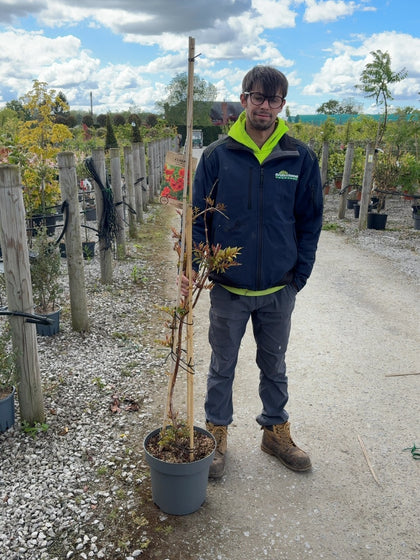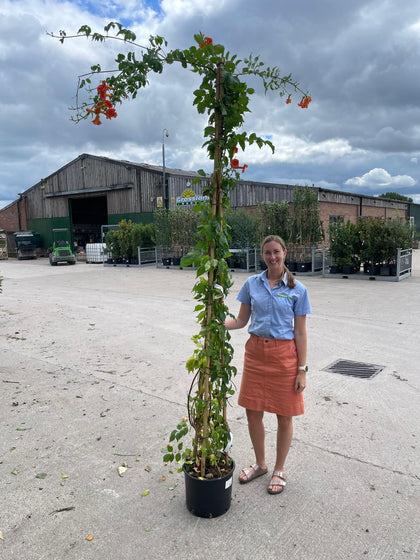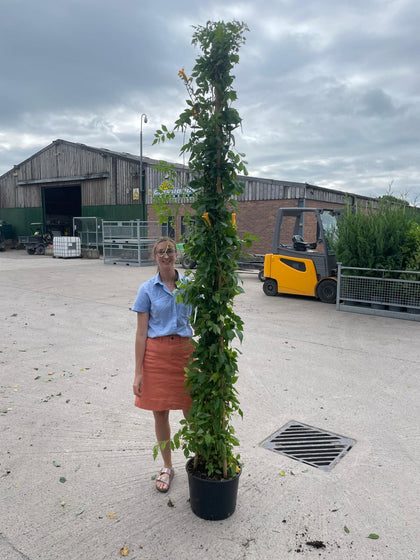
Campsis × tagliabuana 'Madame Galen' is one of the most spectacular flowering climbers you can grow, producing large, flared trumpet flowers in a rich salmon-orange that blaze against the foliage from midsummer well into autumn. A vigorous hybrid between the American and Chinese trumpet vines, 'Madame Galen' inherits the best of both parents — bold, divided foliage, strong climbing stems and an abundance of blooms that are irresistible to nectar-seeking birds and bees. Given a warm wall or sturdy support, this is a plant that truly earns its place in the garden.
Habit and appearance
A bold, deciduous climber that attaches itself to surfaces by aerial rootlets, sending out long, arching stems clad in attractive pinnate leaves composed of numerous toothed leaflets. The flowers are borne in large terminal clusters, each bloom a wide, flaring tube of glowing salmon-apricot with a warm orange interior. The display builds through summer and continues reliably until the first frosts, making 'Madame Galen' a standout performer over a very long season.
Growing conditions
Thrives in a warm, sunny position sheltered from cold winds — a south- or west-facing wall is ideal and will encourage the most prolific flowering. Trumpet vine is adaptable to most well-drained soils, including relatively poor or dry ones; overly rich, fertile soils can promote lush leafy growth at the expense of flowers. Once established it is drought tolerant and impressively resilient. Provide a solid, sturdy support structure such as a wall, trellis, pergola or substantial fence, as mature plants can become quite heavy over time.
Care
Little ongoing care is needed once 'Madame Galen' is established, making it a rewarding low-maintenance climber. Water regularly during the first growing season to help the root system establish, then reduce watering as the plant becomes self-sufficient. An application of a balanced, low-nitrogen fertiliser in spring will support strong flowering without pushing excessive leafy growth.
Pruning
Prune in late winter or early spring before new growth begins. Because flowers are produced on the current season's growth, hard pruning at this time encourages vigorous new shoots and a generous floral display. Cut back all side shoots to two or three buds from the main framework, and remove any dead, damaged or overcrowded stems entirely. Over time, the plant will develop a permanent woody framework that requires only this annual tidy to keep it productive and well shaped. In very sheltered or mild areas, growth can be exceptionally vigorous, so do not be afraid to prune firmly to keep the plant within its allotted space.