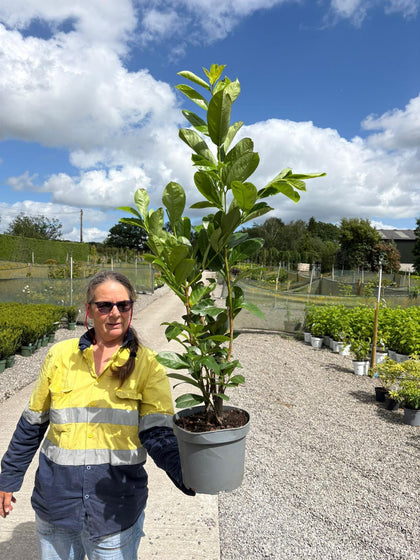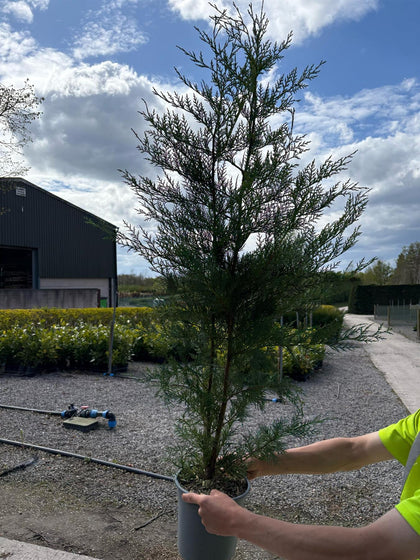
Ilex × altaclerensis 'Gold King', commonly known as Holly, is a striking evergreen shrub celebrated for its bold, variegated foliage and year-round garden presence. Each broad, glossy leaf is a deep, rich green at its centre, edged with a bold margin of bright golden yellow — a combination that brings warmth and light to the garden in every season. Despite its name, 'Gold King' is in fact a female cultivar, capable of producing a generous display of vibrant red berries in autumn and winter when a suitable male pollinator is nearby.
Vigorous and upright in habit, this Highclere Holly is a reliable performer for hedging, specimen planting, and sheltered borders. Its large, relatively smooth-edged leaves give it a more refined appearance than many traditional hollies, making it equally at home in formal and contemporary planting schemes.
Key Features
Foliage: Ilex × altaclerensis 'Gold King' produces broad, glossy leaves with a deep green centre and a wide, irregular golden-yellow margin. The variegation is bold and consistent, providing strong year-round colour interest even in the depths of winter.
Berries & Flowers: Despite its name, this cultivar is female and will bear clusters of bright red berries from autumn into winter, provided a compatible male holly is growing nearby to provide pollination. Small, white, nectar-rich flowers appear in late spring, attracting bees and other pollinators.
Habit & Size: 'Gold King' grows with an upright, bushy habit, ultimately reaching a substantial size if left unpruned. It is moderately vigorous, making it suitable as a specimen shrub, a structural focal point, or as part of a mixed or formal hedge.
Growing Conditions
Aspect: For the best variegation and most vibrant golden colouring, plant in full sun or light partial shade. Deeper shade will cause the golden margins to become less vivid and may reduce berry production. A position sheltered from harsh, drying winds is ideal, particularly in exposed gardens.
Soil: 'Gold King' thrives in moist, well-drained soil and is tolerant of a wide range of soil types, from slightly acidic to neutral. It copes reasonably well with heavier clay soils provided drainage is adequate. Avoid waterlogged conditions, which can stress the roots.
Hardiness: Fully hardy throughout the UK, Ilex × altaclerensis 'Gold King' is robust enough to handle cold winters and is less prone to wind scorch than some other holly varieties owing to its relatively thick, leathery leaves.
Care
Watering: Water regularly during the first growing season to help the plant establish a strong root system. Once settled, 'Gold King' is reasonably drought tolerant, though it will benefit from occasional watering during prolonged dry spells, particularly in summer.
Feeding: Apply a balanced general-purpose fertiliser in spring to encourage healthy growth and vibrant foliage colour. A mulch of well-rotted organic matter around the base each spring helps retain moisture and gradually improves soil condition.
Pruning: Prune in late summer to maintain shape and size. Holly responds well to clipping and can be trained into a formal hedge or kept as a neat specimen with an annual trim. Avoid cutting back into very old wood, as regrowth can be slow. Always wear gloves when handling, as even the relatively smooth-edged leaves of this cultivar can be sharp.
Pollination for Berries: To ensure a reliable berry display, plant a compatible male holly — such as Ilex 'Golden King' (which is paradoxically male) or another nearby male cultivar — within reasonable distance to facilitate pollination.
Garden Use & Design Ideas
Specimen planting: The bold golden variegation makes 'Gold King' a natural focal point. Plant as a standalone specimen in a lawn or border where its year-round colour can be fully appreciated.
Hedging: Its upright habit and vigorous growth make it an excellent choice for a tall, formal or informal hedge that offers privacy, security, and wildlife value alongside striking ornamental foliage.
Mixed borders: Combine with dark-foliaged plants or late-season perennials to allow the golden margins to shine. The berries add further seasonal interest from autumn through winter when much of the garden is at rest.
Wildlife gardens: The flowers attract bees in spring, while the berries provide an important food source for birds such as thrushes and blackbirds during the colder months — making 'Gold King' as valuable to wildlife as it is beautiful in the garden.