Camellia japonica – The Common Camellia – A Timeless Evergreen Shrub with Spectacular Blooms
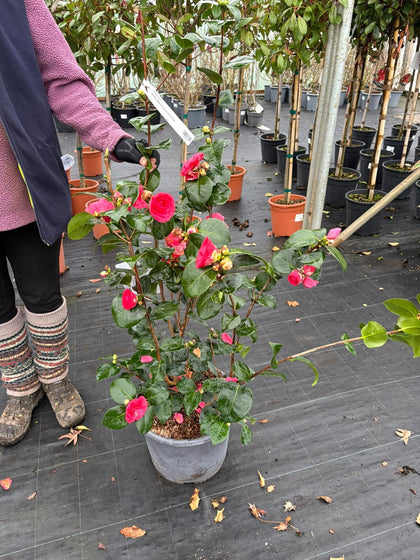
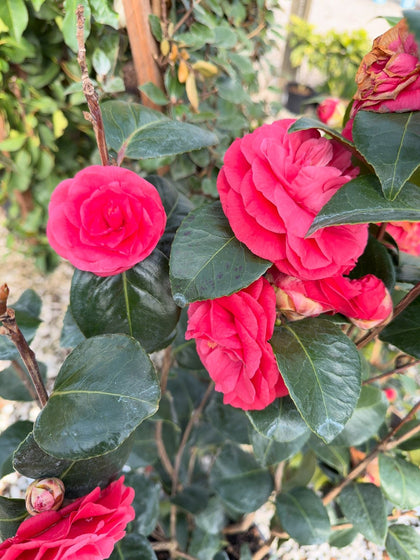
Few garden shrubs can rival the enduring beauty of Camellia japonica, the Common Camellia. A beloved evergreen classic, it is celebrated for its sumptuous flowers in shades ranging from pure white and soft pink through to deep crimson and richly patterned bicolours, all set against a backdrop of glossy, dark green leaves. Blooming from late winter into spring, it brings bold colour and elegant structure to the garden at a time when little else is at its best. Whether grown as a specimen shrub, in a mixed border, or as a striking container plant, Camellia japonica is a rewarding, long-lived addition to any outdoor space.
Seasonal interest
Late winter to spring: The main flowering season, when large, showy blooms emerge in a wide variety of forms — single, semi-double, double, and peony-flowered — creating a dazzling seasonal display. Summer: Rich, glossy evergreen foliage provides a lush, structured backdrop as the rest of the garden comes to life. Autumn: Deep green leaves remain vibrant and attractive, lending form and texture as other plants begin to fade. Winter: The dense evergreen canopy continues to provide year-round structure and interest, with flower buds already forming in readiness for the season ahead.
Habit and appearance
Form: Camellia japonica forms a bushy, upright to rounded evergreen shrub with a naturally neat and well-branched habit. It is a moderate to slow grower, developing into a substantial specimen over time. Flowers: Blooms are typically large and showy, appearing in a broad palette of colours and flower forms depending on the variety. They make an outstanding display against the deep green foliage. Foliage: Leaves are oval, leathery, and highly glossy, retaining their rich dark green colour throughout the year and providing excellent all-season ornamental value.
Growing conditions
Position: Camellia japonica thrives in partial shade, ideally receiving dappled light or morning sun with shelter from harsh afternoon sun and cold, drying winds. A north- or west-facing sheltered wall or a woodland garden setting suits it particularly well. Avoid east-facing positions where early morning sun can damage frosted buds. Soil: Requires moist, humus-rich, well-drained soil with an acidic to neutral pH. It will not thrive in chalky or alkaline conditions. When planting, incorporate plenty of ericaceous compost to create the ideal growing environment. Hardiness: Generally hardy across most of the UK when established, though flower buds can be susceptible to damage from late frosts. A sheltered position offers the best protection.
Care and pruning
Watering: Water regularly during dry spells, particularly in the first few seasons after planting while the roots are establishing. Where possible, use rainwater rather than tap water, as hard water can raise the soil pH over time and cause nutrient deficiencies. Feeding: Apply a specialist ericaceous or acid-loving plant fertiliser in spring to encourage healthy growth and abundant flowering. Mulching: Mulch annually around the base of the plant with ericaceous compost or composted bark to retain moisture, suppress weeds, and maintain acidity. Keep mulch clear of the main stem. Pruning: Camellia japonica requires very little pruning. If needed, lightly trim to shape immediately after flowering has finished in spring, before the new season's growth begins. Remove any dead, damaged, or crossing branches at the same time. Avoid pruning in late summer or autumn, as this risks removing the developing flower buds.
Ideal uses
Specimen planting: A mature Camellia japonica in full flower makes a magnificent focal point in any garden. Mixed borders: Provides structure, year-round foliage, and seasonal colour alongside other acid-loving shrubs and woodland perennials. Wall shrubs: Ideal for training against a sheltered fence or wall, where the additional warmth and shelter encourages generous flowering. Container growing: Well suited to large containers filled with ericaceous compost, making it a versatile choice for patios, courtyards, and smaller gardens. Companion planting: Pairs beautifully with rhododendrons, azaleas, pieris, ferns, hostas, and spring bulbs such as snowdrops and bluebells for a coordinated woodland-inspired scheme.
Camellia japonica is a garden classic for good reason — reliably beautiful, evergreen, and spectacular in flower, it offers enduring elegance and year-round structure with surprisingly little effort once established. A truly worthwhile investment for any garden.